


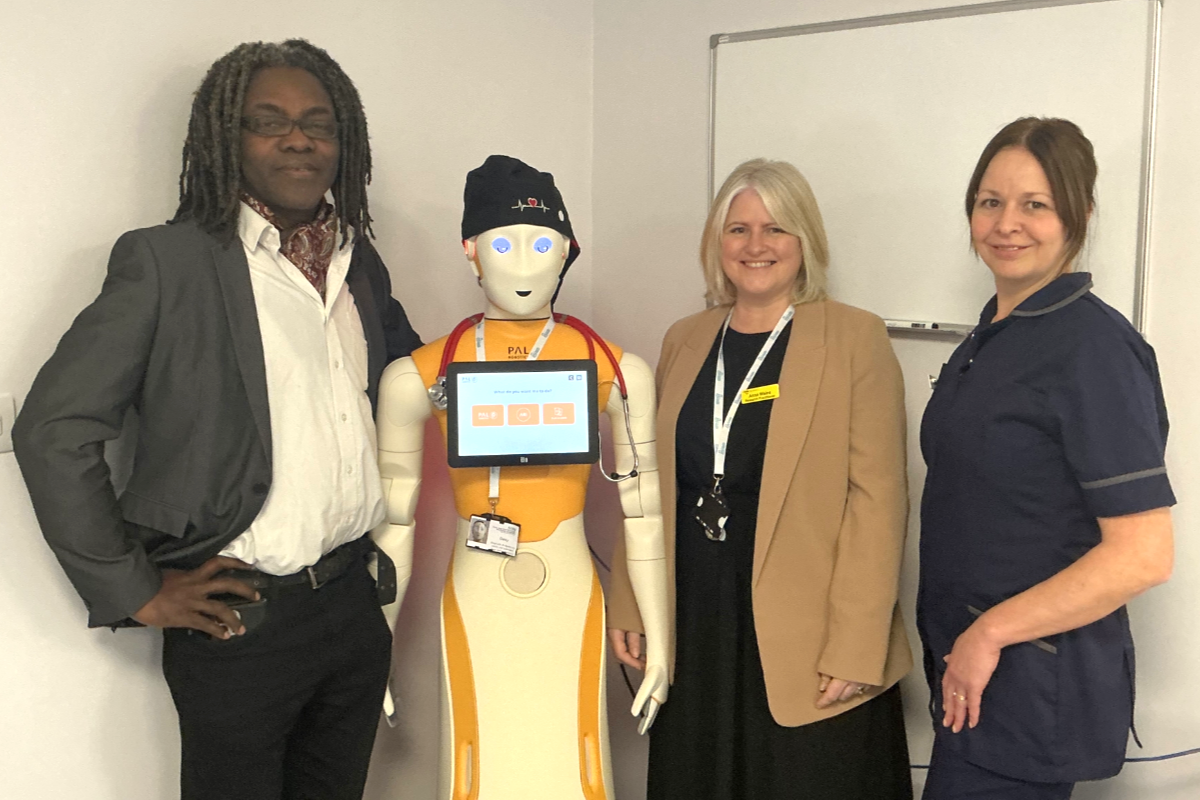
NHS staff at Scarborough Hospital’s Emergency Department have welcomed a new colleague this month - a research robot called DAISY.
DAISY, which stands for Diagnostic Artificial Intelligence System, is a pilot prototype humanoid device, designed to assist with the initial clinical triage assessments routinely carried out when patients attend the emergency department.
The aim is to explore whether DAISY’s advanced digital technology can enhance these processes.
The system provides instructions to patients on how to use medical equipment to measure their own vital signs. DAISY will ask patients a series of health-related questions, gathering important data such as symptoms, body temperature, and pulse rate. All this information is then analysed and compiled into a clinical report, which is intended to support staff in their assessment of the patient.
Only patients who are willing, consent and can use DAISY will be invited to try it.
DAISY does not replace any routine care. At this stage, the research pilot is designed to simply assess DAISY’s functionality and compare its assessment to that of a clinician. There is no change to patient care, and patients enrolled in the pilot will only be treated based on the clinician's diagnosis.
The project is being led by Dr Ol'Tunde Ashaolu, Emergency Medicine Consultant at York and Scarborough Teaching Hospitals NHS Foundation Trust, alongside Professor Radu Calinescu from the University of York’s Department of Computer Science and Institute for Safe Autonomy. The pilot is being supported by the Trust’s Research and Innovation Team.
The team will investigate the social, legal, ethical, empathetic, and cultural concerns surrounding the use of artificial intelligence and social robotics in healthcare, while working closely with both clinicians and patients to address the challenges associated with the integration of this technology.
Dr Ashaolu, DAISY clinical lead explained:
“Evidence shows that patients survive more and live better lives when their ailments are identified and treated at the earliest stage. This device represents an important first step towards the development of a solution for automating key stages of the emergency department triage process, potentially reducing waiting times and clinical workload.”
Professor Calinescu, co-investigator on the DAISY clinical project, added:
“Robotics and AI are already integrated into many healthcare systems worldwide, primarily for tasks related to deliveries and maintenance.
“However, looking to the future, we need a deeper understanding of how these technologies can directly support medics, including through interactions with patients. This involves considering not only their technical capabilities, but also how they are perceived by end-users.”
Developed in partnership between the Trust and the University of York, the six-month research pilot has been made possible thanks to a charitable legacy left to the Trust by Elsie May Sykes, managed through York & Scarborough Hospitals Charity.

 Everyday Voices Will Meet Decision Makers As Major Northern Convention Arrives In Scarborough
 Flamborough Lifeboat Stalwart Retires After Fifty-Four Years Of Service
 Thrill-Seekers Plunge 42 Metres From Whitby Viaduct To Save Historic Railway Bridge
 Rapid Health Advice Promised For Asthma Sufferers Following North York Moors Wildfire
 Listed Whitby Hotel Painted Pink Without Permission to Be Redone
 Amended Timetable & Cancelled Trains Between Scarborough & Hull This Week
 Yorkshire Coast Businesses Urged To Join New Maritime And Renewables Cluster
 Visitor Levy Feasibility Study Recommended For North Yorkshire Coast
 Yorkshire Coast Derby in FA Trophy
 Over 650 Veterans Gather For All Services Parade In North Yorkshire
 MP Says Tourism Levy Money Raised In Scarborough And Whitby 'Should Stay On Coast'
 MPs Urge Prime Minister To Make A64 Dualling A Priority










Comments
Add a comment