


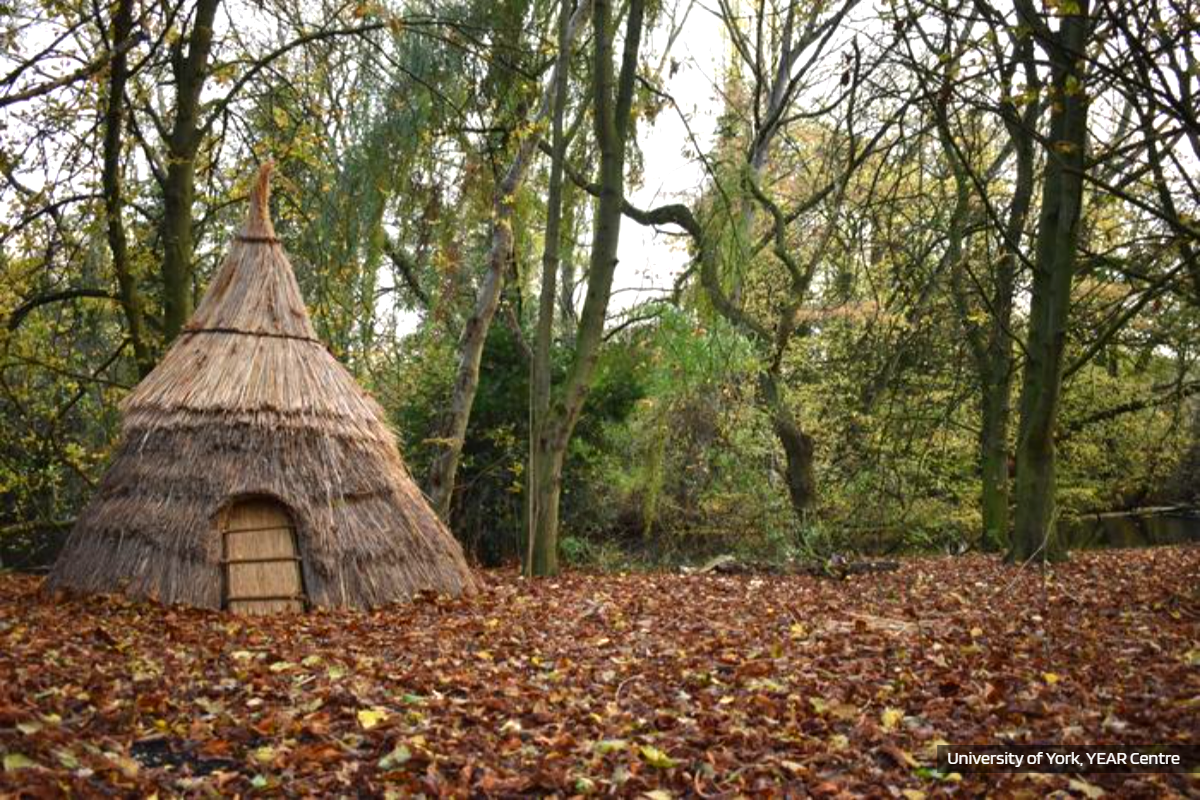
Hunter-gatherers kept an 'orderly home' in the earliest known British dwelling, study shows
Archaeological evidence from the world-famous Mesolithic site of Star Carr near Scarborough has shown that hunter-gatherers likely kept an orderly home by creating ‘zones’ for particular domestic activities.
The research team from the University of York and the University of Newcastle, looked at microscopic evidence from the use of stone tools found inside three structures - potentially cone-like in shape or domed - dating to over 11,000 years ago at the Star Carr site.
They found that there was a range of activities that were likely to have taken place inside the ‘home’, including wood, bone, antler, plant, hide, meat and fish related work. The researchers then plotted out spatial patterns for these activities to pin-point where within the dwelling these activities might have occurred.
Dr Jess Bates, from the University of York’s Department of Archaeology said:
“We found that there were distinct areas for different types of activity, so the messy activity involving butchery, for example, was done in what appears to be a designated space, and separate to the ‘cleaner’ tasks such as crafting bone and wooden objects, tools or jewellery.
“This was surprising as hunter-gatherers are known for being very mobile, as they would have to travel out to find food, and yet they have a very organised approach to creating not just a house but a sense of home.
“This new work, on these very early forms of houses suggests, that these dwellings didn’t just serve a practical purpose in the sense of having a shelter from the elements, but that certain social norms of a home were observed that are not massively dissimilar to how we organise our homes today.”
Previous work has also shown that there is evidence that hunter-gatherers kept their dwellings clean, as well as orderly, with indications that sweeping of the inside of the structure took place.
Star Carr provides the earliest known evidence of British dwellings and some of the earliest forms of architecture. One of the structures found was believed to be shaped like a cone and was constructed out of wood from felled trees, as well as coverings possibly made from plants, like reeds, or animal hides. There is still very little known about why hunter-gatherers would build such structures and continued to throughout the Mesolithic period.
Dr Bates said:
“Not only do we now know that hunter-gatherers were constructing these dwellings, but they had a shared group understanding of how to organise tasks within them.
“In modern society we are very attached to our homes both physically and emotionally, but in the deep past communities were highly mobile so it is fascinating to see that despite this there is still this concept of keeping an orderly home space.
“This study shows that micro-scale analysis can be a really exciting way of getting at the details of these homes and what these spaces meant to those who lived there.”
The research is published in the journal PLOS One.

 Nine Minutes from Glory: Heartbreak for Boro as Macclesfield Snatch Late Replay
 Scarborough Foster Couple To Run New Support Hub For Vulnerable Children
 North Yorkshire Faces Major Challenge to Prepare Local Plan in 30 Months
 Record Numbers Of Young People Explore Future Careers At East Yorkshire Apprenticeship Expo
 Historic Sleights Pub Set To Reopen Under New Local Ownership
 Pre-Halloween Spooktacular Will Raise Vital Funds For Scarborough Hospice
 Patients Could Opt Out of Care Over NHS Data Platform Fears, Councillors Warned
 New Noodle Takeaway Planned For Flagship Filey Holiday Park
 Scarborough Construction Skills Village To Reopen Following £2 Million Investment
 Scarborough Athletic Face Tough FA Cup Test At Macclesfield
 Classic Cars Set To Begin Epic 500-Mile Roman Road Journey From Robin Hood's Bay
 Proposed Tourist Tax Sparks Fear Among Yorkshire Coast Accommodation Providers










Comments
Add a comment