


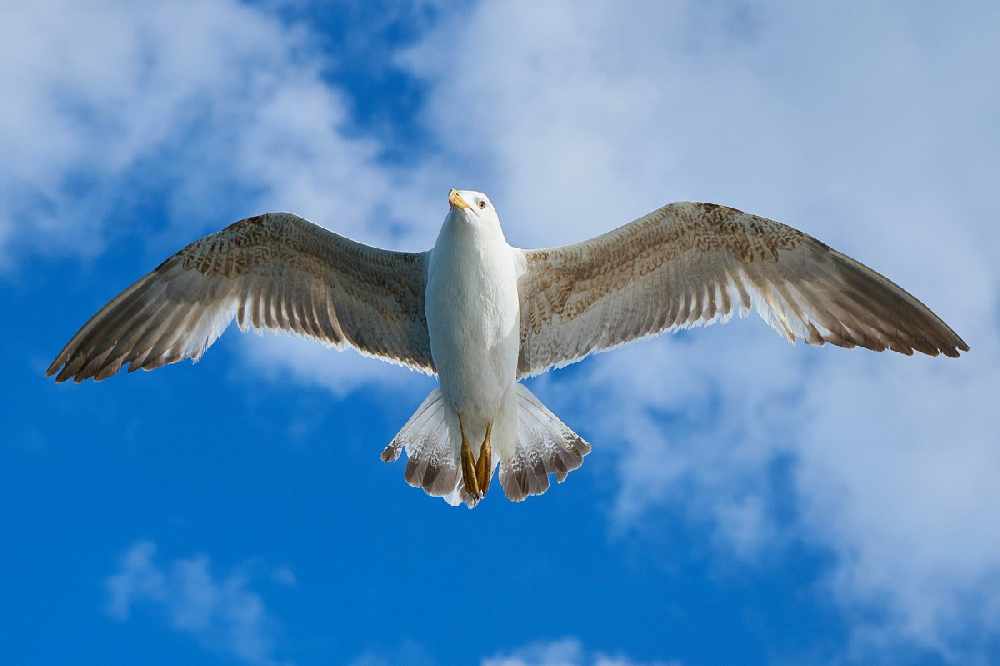
As a new urban gull strategy is approved for the North Yorkshire coast a report says historic attempts to manage urban gulls through nest removals and building deterrents have largely failed to reduce populations and often caused severe harm to the birds.
Past efforts to control urban gulls on the Yorkshire Coast through nest removals and building deterrents have largely failed to reduce populations and often displaced the birds or caused them harm.
A newly approved urban gull strategy for Scarborough, Whitby, and Filey has laid bare the shortcomings of historic control measures. Thousands of eggs and nests were destroyed, and tens of thousands of pounds were spent on building modifications in recent years, but a comprehensive review reveals these tactics did not achieve their goals.
Herring gull populations remained unaffected by a major disruption programme that ran between 2017 and 2019. During this period, 807 nests and 1,436 eggs were removed in Scarborough, along with 82 nests in Whitby. The removals targeted areas with high concentrations of nesting, covering around twelve percent of Scarborough's total geographical area.
The report stated:
"Despite the number of nests and eggs removed... the population of Herring gull remained relatively stable between 2018 and 2019. In conclusion the study proved that the programme was not effectively meeting its objectives, and the programme was not continued."
Practical challenges hindered the operation, as many nests could not be accessed. Daily surveys along Scarborough's main high street and foreshore showed that Herring gulls remained present in abundance despite the targeted removals. Historic attempts using narcotic bait in 1977 and nest removals in 1991 were similarly deemed ineffective.
Financial grants for bird-proofing buildings also produced mixed results and serious animal welfare concerns. Between 2019 and 2025, a grant scheme supported 65 applications across the coast, with around £27,500 in funding provided towards total proofing costs of £143,000. The scheme funded the installation of spikes, electrified tracks, and netting.
Plastic spikes proved popular but ultimately flawed. While they stopped gulls from nesting on specific apex joints, the birds simply adapted by building nests between chimneys or directly on top of the spikes.
The study's authors noted:
"Within Scarborough town there is evidence of birds being harmed by spikes and chicks dying following being impaled on them."
Netting created similar hazards. Inspections revealed that poorly maintained nets developed large holes, leading to birds becoming trapped.
The review warned:
"Netting can pose a risk of entanglement or entrapment for birds and not just gulls. There is evidence of birds dying in such scenarios or being entangled alive. These occurrences can result in creating public alarm and on occasion lead to attempts to rescue birds."
Fire gel, a non-toxic substance designed to look like a flame to birds, was deployed extensively on Scarborough's Spa Bridge in 2023 to deter Kittiwakes. The installation of 2,500 tubs cost up to £50,000 but only achieved a thirty percent reduction in breeding pairs, and numbers are already rising again.
The report concluded:
"Fire gel is only at best partially effective with any impacts also being limited in duration, in keeping with the stated shelf life and effectiveness of 2-years. Fire gel pots are exposed to the weather and are prone to becoming covered over with dirt, fouling or dislodged."
Low-profile electrified tracks, known as Avi-Shock, were found to be the most effective and discreet deterrent, though they require ongoing maintenance to prevent electrical shorting.
General proofing grants were suspended in January 2025. Officials recognised that modifying individual buildings simply forces nesting birds to move to the next suitable location, rather than solving the wider issue of human-wildlife conflict.
The new strategy focuses on five core areas: education and communication, waste management, cleaning services, proofing, and ongoing monitoring. The measures aim to balance the legal protection of Herring Gulls and Kittiwakes with the need to maintain clean and safe urban spaces in towns such as Scarborough and Whitby.
As part of the strategy, £50,000 has been allocated for seasonal jetting to remove guano from streets and public areas. An additional £30,000 will fund gull-proof sacks, while £19,500 is set aside for new and retrofitted litter bins to restrict the birds' access to food.

 Nine Minutes from Glory: Heartbreak for Boro as Macclesfield Snatch Late Replay
 East Riding Mum Ventures Change To System After Second Term Time Holiday Fine
 North Yorkshire Faces Major Challenge to Prepare Local Plan in 30 Months
 Pre-Halloween Spooktacular Will Raise Vital Funds For Scarborough Hospice
 Scarborough Foster Couple To Run New Support Hub For Vulnerable Children
 Record Numbers Of Young People Explore Future Careers At East Yorkshire Apprenticeship Expo
 Historic Sleights Pub Set To Reopen Under New Local Ownership
 Patients Could Opt Out of Care Over NHS Data Platform Fears, Councillors Warned
 New Noodle Takeaway Planned For Flagship Filey Holiday Park
 Scarborough Construction Skills Village To Reopen Following £2 Million Investment
 Classic Cars Set To Begin Epic 500-Mile Roman Road Journey From Robin Hood's Bay
 Proposed Tourist Tax Sparks Fear Among Yorkshire Coast Accommodation Providers