


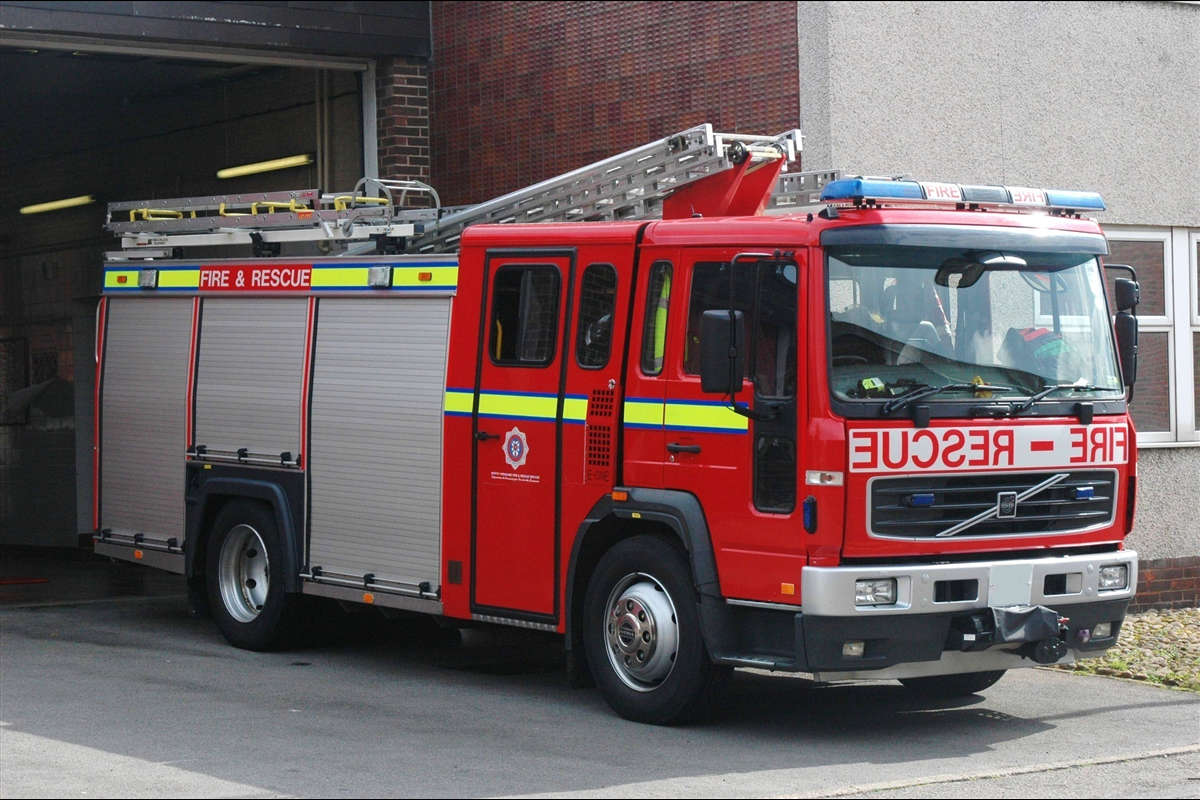
North Yorkshire Fire and Rescue Service has extended its policy of not responding to automatic fire alarms at commercial premises to 24 hours a day in a bid to reduce false alarms.
North Yorkshire Fire and Rescue Service has implemented a major change to the way it responds to automatic fire alarms.
From the first of July, the service will no longer attend automatic fire alarm activations at commercial premises and other buildings where people do not sleep, 24 hours a day, unless a fire is confirmed.
Previously, the policy of not attending these automatic alerts was only in place between 7am and 7pm. The extension to a 24-hour period aims to prioritise resources where they are needed most and brings the service in line with regional and national practices.
The revised approach forms part of the Community Risk Management Plan for 2025 to 2029 . The fire service has stated that the majority of automatic fire alarm calls at commercial premises are false alarms . They expect the new procedure will allow crews to spend more time on prevention work, training, business safety activities, and responding to genuine emergencies].
Under the revised approach, an emergency response will always be provided if a fire is confirmed, and crews will continue to attend all incidents at domestic properties and premises where people sleep.
The change comes as the service reports an increase in overall callouts. According to the latest service delivery performance data for the period between the first of June 2025 and the thirty-first of May 2026, the overall count of incidents attended increased by six per cent compared to the previous year, rising from 8,128 to 8,584.
The data also revealed a seven per cent increase in false alarms, which rose from 3,420 to 3,662 over the same twelve-month period .
Ben Illsley, Director of Operational Support and Assurance at North Yorkshire Fire and Rescue Service, said:
"We're attending on average between eight and eight and a half thousand incidents per year.
There was a 6% increase, some of that is because this reporting period still picks up the busy August we had last year.
In terms of trends, false alarms have creeped up slightly 7% versus the previous 12 month period. Fires are pretty stable despite the the summer months and the Langdale incident and special services have remained very stable.
False alarms continue to be our biggest attendance, firstly for apparatus, second for intent followed by the small fires in the open."
The fire service noted that poor maintenance of fire alarm systems remains a key cause of false alarms. Under the Regulatory Reform (Fire Safety) Order 2005, businesses are responsible for maintaining effective fire safety measures.
Since initial changes to automatic fire alarm attendance were introduced in 2023, the service reported spending eight per cent less time responding to these calls. This has freed up time to focus on commercial premises in rural and remote areas, as well as significantly increasing community safety efforts.
Recent performance figures show that the overall count of Home Fire Safety Visits has increased by 54 per cent, rising from 4,195 to 6,481 over the last twelve months. The service has also established clear timescales for consultation responses in line with the Regulatory Reform Order, completing 98 per cent of consultations on time during April and May 2026 despite a seven per cent year-on-year increase in volume.
Speaking about the expected impact of the new 24-hour policy regarding automatic alarms, Mr Illsley said:
"It's hard to predict and project what impact it will have. We certainly expect it will bring that down.
The challenge with the false alarm caused by pre-processing has 2,412 times the fire engine has been deployed to something and stop them from doing other meaningful work.
It creates additional road risk by travelling unnecessarily on blue lights. So we're certainly hopeful and the reason the the change has been brought in is to reduce that figure."
The service will continue to attend identified high-risk premises based on risk and intelligence. During the 2026 to 2027 fiscal year, the Risk Based Intervention Programme has already identified 350 of the highest risk buildings for interventions.
Alongside the changes to alarm responses, the service continues to meet its defined response standards, which are aligned to operational expectations and public accountability. The target for overall incidents is 13 minutes, with recent performance showing average response times of 12 minutes and 22 seconds in April, and exactly 12 minutes in May.

 Record Multimillion-Pound Investment Promises To Fix North Yorkshire's Roads And Potholes
 North Yorkshire Police Emergency Call Waiting Times Remain Low Despite Surge In Demand
 Row Over £20,000 'Incorrect' Public Toilet Charges in Whitby
 'Strong Fish Smells' Spark Objections To Seafood Business Application
 Maternity And Neonatal Services Face £736,000 Funding Gap To Meet New Safety Standards
 Concerns Raised Over Tourist Tax Powers In North York Moors National Park
 Educational Outcomes For Coastal Children To Receive Major Boost Under New Pilot Scheme
 Special Train Journey Evokes Precious Memories For Dementia Patients On The Yorkshire Coast
 Free Flu Vaccines Will Be Available At Drop-In Clinics Along The Yorkshire Coast
 Extracurricular Opportunities Set To Expand For Pupils In Scarborough And Whitby
 Time-Travelling Children Uncover Scarborough's Geological Past
 Solar Panels Confirmed For Whitby And Eastfield Public Buildings To Cut Energy Bills