

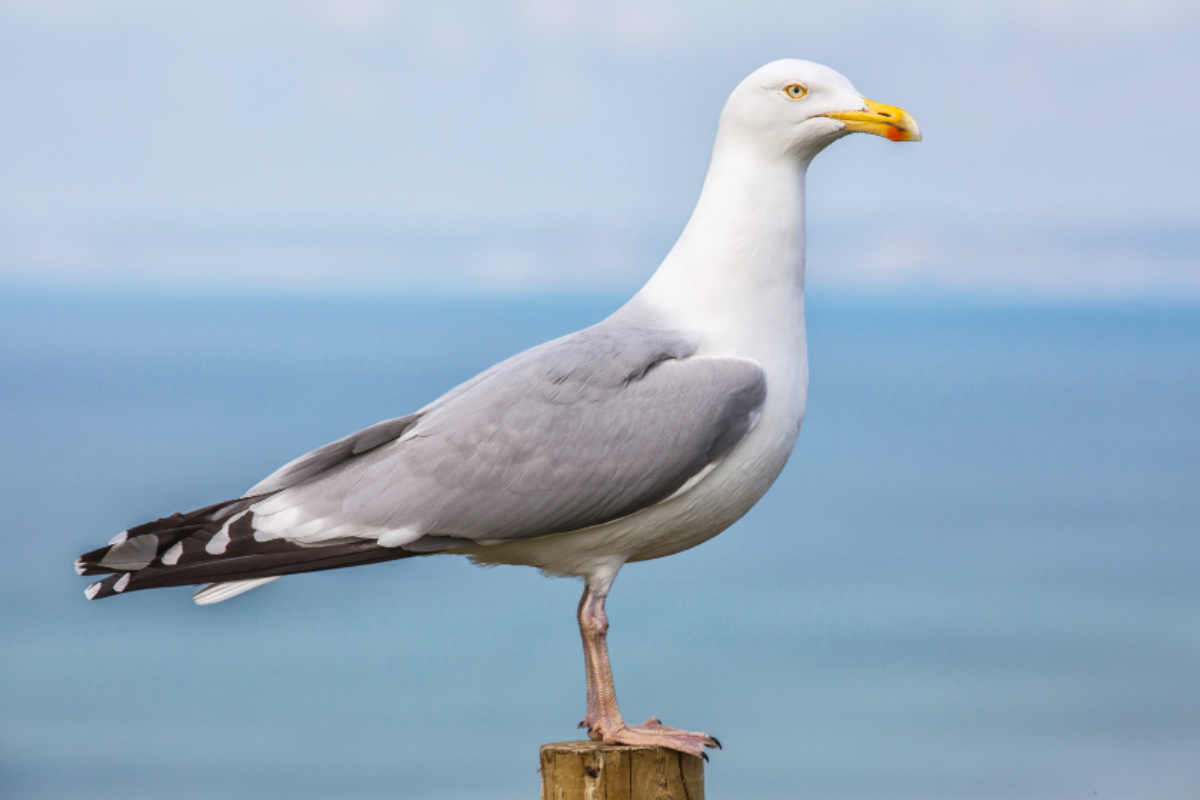
A £119,500 strategy to manage urban gulls through enhanced street cleaning, gull-proof sacks, and potential food waste collections has been approved for the North Yorkshire Coast.
Enhanced street cleaning, gull-proof waste sacks, and potential food waste collections will soon be rolled out to tackle aggressive urban gulls across the Yorkshire Coast.
A £119,500 investment in the new Urban Gull Strategy has been approved by the executive committee, signalling a move away from previously used lethal control methods and nest destruction.
Instead, the plan focuses on five core areas: education and communication, waste management, cleaning services, proofing, and ongoing monitoring. The measures aim to balance the legal protection of Herring Gulls and Kittiwakes with the need to maintain clean and safe urban spaces in towns such as Scarborough and Whitby.
As part of the strategy, £50,000 has been allocated for seasonal jetting to remove guano from streets and public areas. An additional £30,000 will fund gull-proof sacks, while £19,500 is set aside for new and retrofitted litter bins to restrict the birds' access to food.
Councillor Malcolm Taylor welcomed the funding for street cleaning.
He said:
"I'd just like to commend the the seasonal jetting. I think there's £50,000 allocated as part of this paper to seasonal jetting. I think anybody who has been to Scarborough recently, I do spend a bit of time in Scarborough, there is a problem with the seagull Guano and I think it is a really positive step which will be welcomed by the public and visitors alike in Scarborough if we can tackle some of that mess that we've got in the town, and hopefully this policy will go some way and that investment will help to address those concerns."
The strategy also proposes exploring the introduction of separate food waste collections in coastal areas ahead of existing schedules. A feasibility study for a pilot scheme is expected to report back to the Scarborough and Whitby Area Committee in September 2026.
Councillor Heather Philips highlighted the current challenges faced by locals and visitors during the breeding season.
She said:
"The gulls have just fledged and Scarborough is full of teenage gulls and they are very very aggressive and they learn from their parents because they're a fantastic bird, they can live up for 20 years, but we do need to try and mitigate what they're doing and we do look forward to seeing food collection being by the council and not by the seagulls in the very near future at Scarborough."
Under the Wildlife and Countryside Act 1981, all gull species are protected as wild birds. The Environment Act 2021 also places a duty on local authorities to protect and enhance biodiversity.
While Herring Gulls and Kittiwakes are experiencing significant population declines globally, their increasing presence in urban areas has led to noise, fouling, and public health concerns.
Councillor Richard Foster explained the need to balance conservation duties with the management of the birds' impact on urban environments.
He said:
"
The age old problem of gulls, we need to protect, we've a statutory duty to enhance biodiversity. Kittiwakes and herring gulls are in decline, but in our urban areas they appear to be thriving.So this is really how we as a council mitigate against the anti-social behaviour of the gulls within the urban environment.
The area committee for Scarborough and Whitby, we know that they'd like to see us do more on food collections. And we are at the moment, just going through the policy of doing a new waste strategy, and maybe early pilots of food collection. We will be looking at those and obviously the cost with this particular issue is probably going to be quite high on the agenda for all that."
The new strategy follows a targeted consultation with local businesses, town councils, and environmental organisations. The feedback showed strong support for education, signage, and waste control, alongside a recognition of gulls as part of the coastal character.
To implement the plan, a temporary technical officer will be appointed to coordinate efforts across environmental enforcement, waste operations, and communications. The £119,500 cost for the current financial year will be met from existing budgets as a one-off, but ongoing funding will need to be built into the base budget from 2027 onwards.
By focusing on reducing available food sources and improving waste management, officials hope to establish an environment where residents, businesses, and gulls can successfully co-exist.

 Nine Minutes from Glory: Heartbreak for Boro as Macclesfield Snatch Late Replay
 East Riding Mum Ventures Change To System After Second Term Time Holiday Fine
 North Yorkshire Faces Major Challenge to Prepare Local Plan in 30 Months
 Pre-Halloween Spooktacular Will Raise Vital Funds For Scarborough Hospice
 Did You See East Riding Bridge Colission?
 Scarborough Foster Couple To Run New Support Hub For Vulnerable Children
 Bridlington Town Back To Winning Ways
 Yorkshire Coast Rugby Round Up
 Pickering Town Back Into Top Ten With Victory
 Record Numbers Of Young People Explore Future Careers At East Yorkshire Apprenticeship Expo
 Historic Sleights Pub Set To Reopen Under New Local Ownership
 Patients Could Opt Out of Care Over NHS Data Platform Fears, Councillors Warned