


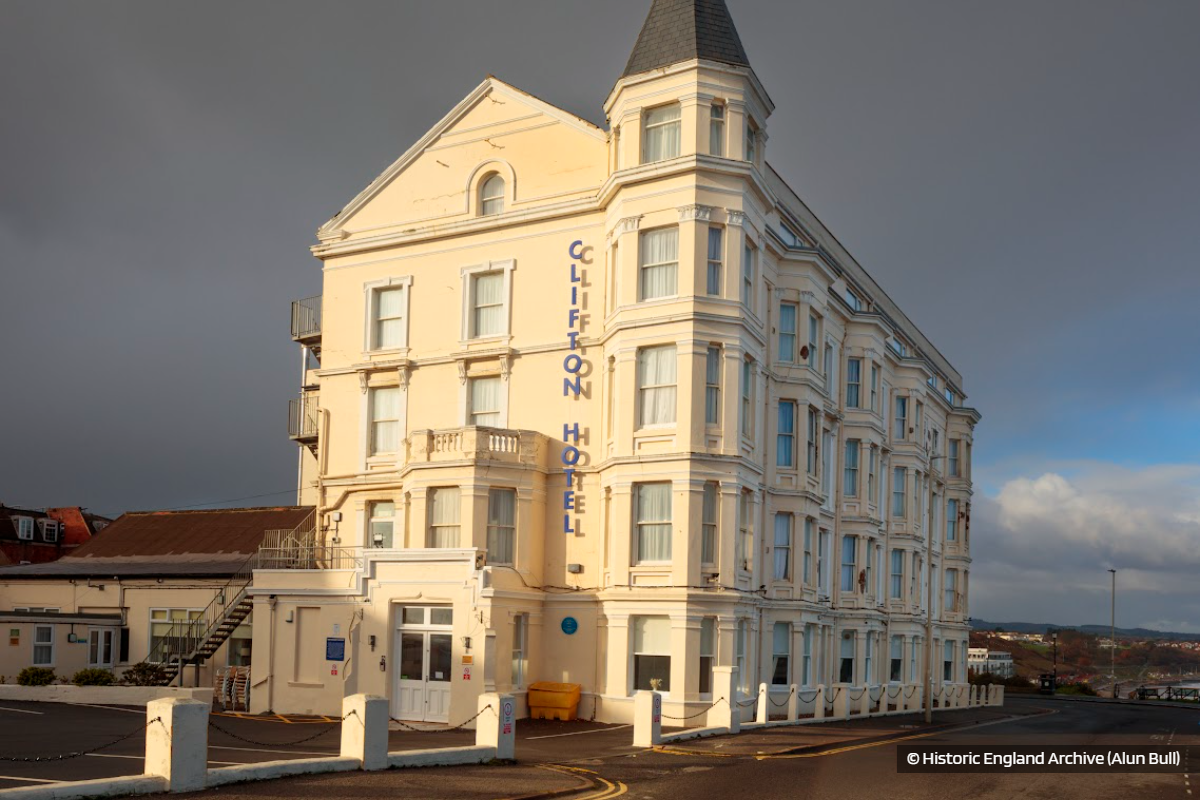
Scarborough's Clifton Hotel has been listed at Grade II by the Department for Culture, Media and Sport (DCMS), on the advice of Historic England.
Built in 1864 as the Alexandra Hotel and designed by Scarborough architect John David Petch, the Clifton is a handsome Victorian seaside hotel. Its strong architectural character – from its bay windows to its distinctive corner tower – reflects the great 19th-century boom in coastal holidaymaking, which shaped Scarborough into one of England’s most celebrated seaside resorts.
Its surviving original interiors include painted timber arcades, glazed screen walls, detailing such as cornices, moulded panelling, fireplaces, a polished timber dance floor and the remains of a narrow stage in the dining room.
The listing recognises the hotel’s architectural quality and survival of many of its original features as well as its national historic importance as a place closely associated with Wilfred Owen (1893–1918), considered one of the nation’s most significant poets of the First World War.
The hotel became an officers’ mess during the First World War, and 24-year-old Owen was billeted here for four months from November 1917 to March 1918 while recovering from shellshock.
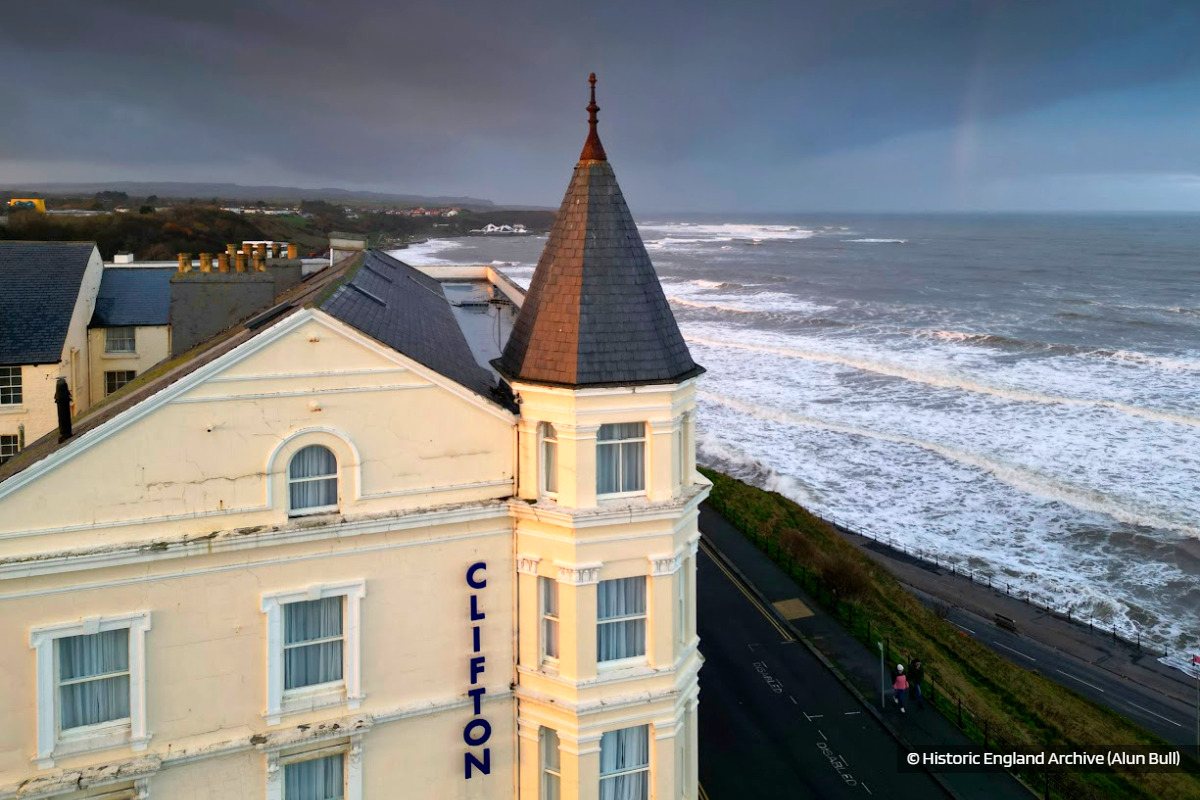
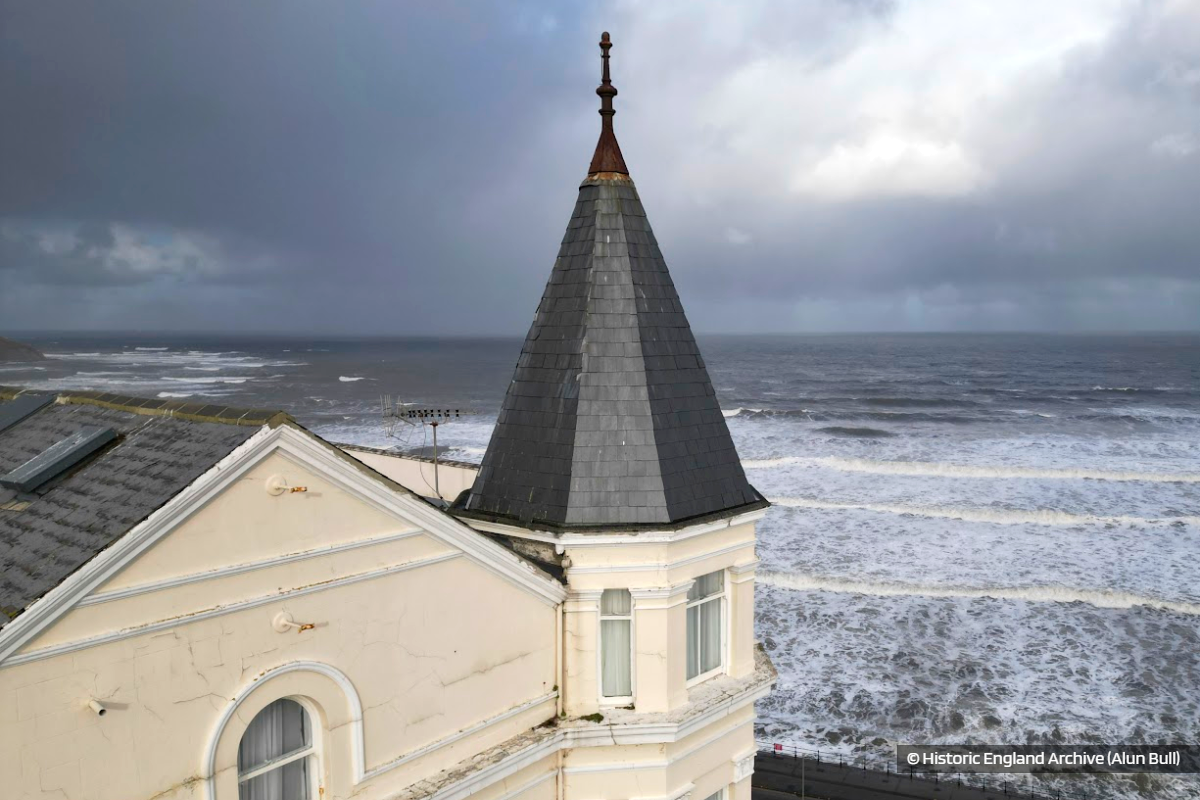
While at the Clifton he was made mess secretary, putting him in charge of running the hotel, which meant he had a good room to himself and an office, both in the turret, now known to be bedrooms 493 and 367. In letters to his mother, he described the turret rooms in which he lived and worked, noting the ‘five-windowed’ views over the sea, and the smoking fire that gave ‘the right atmosphere’ for writing war poetry.
It was here in Scarborough that Owen drafted or revised several of his most profound poems, including Miners (his first commercially published poem), Conscious, A Terre, and Strange Meeting - the poem later described by friend and fellow poet Siegfried Sassoon as Owen’s “passport to immortality”.
Owen remained at the hotel until March 1918, when he left with some regret for training in Ripon, where he continued to write and revise his poems. He rejoined his regiment in Scarborough in June, being posted back to the Western Front in September 1918, where he was awarded the Military Cross (MC) for bravery. He was tragically killed on 4 November, aged 25, one week before the armistice.
Heritage Minister Baroness Fiona Twycross said:
“Our heritage buildings have the power to inspire each and every one of us. The Clifton Hotel’s connection to First World War officers, including one of this country’s greatest war poets, Wilfred Owen, gives it national significance.
“With its prominent position, this hotel has been a landmark in Scarborough for a century and a half. We are safeguarding the inspirational Clifton Hotel for future generations and I hope that it can spark many more profound and deeply moving works of art in the years to come.”
Claudia Kenyatta CBE and Emma Squire CBE, Co-CEOs of Historic England, said:
“The Clifton Hotel remains one of the very few surviving places where we can better understand Wilfred Owen’s creative process, and where the physical setting survives much as he would have known it, because so much of the hotel’s original features have been kept over the years.
“We can imagine him looking out of the tower window, beside the smoking fire he so evocatively described in letters to his mother. We are delighted to see this special place recognised and protected with its Grade II listing.”

 Scarborough Athletic Secure Another Hull City Loanee
 Dredging Boost for Whitby and Scarborough Harbours as Restrictions Relaxed
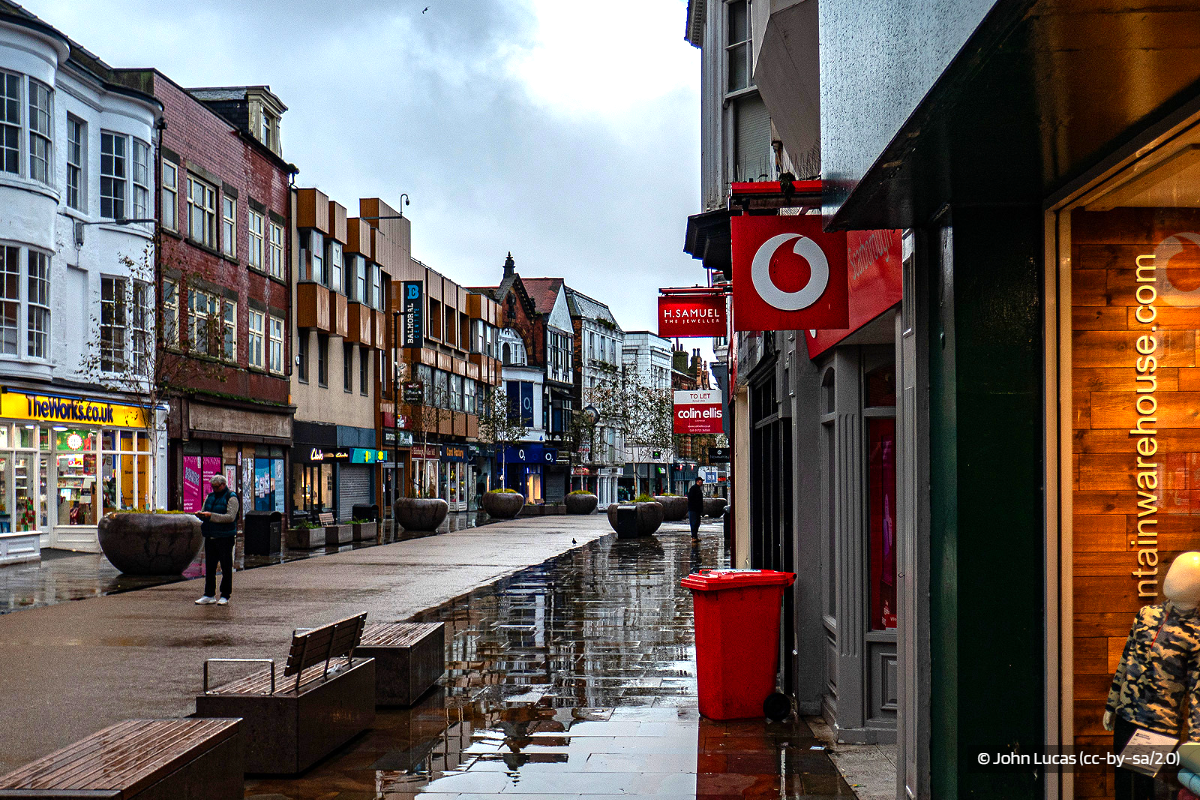 Scarborough MP: New and Exciting Things Opening Up
 Scarborough Athletic Face South East Hike
 Whitby Town Chase Rushall Double
 Bridlington Town Back At Home With Consett Tuning Up
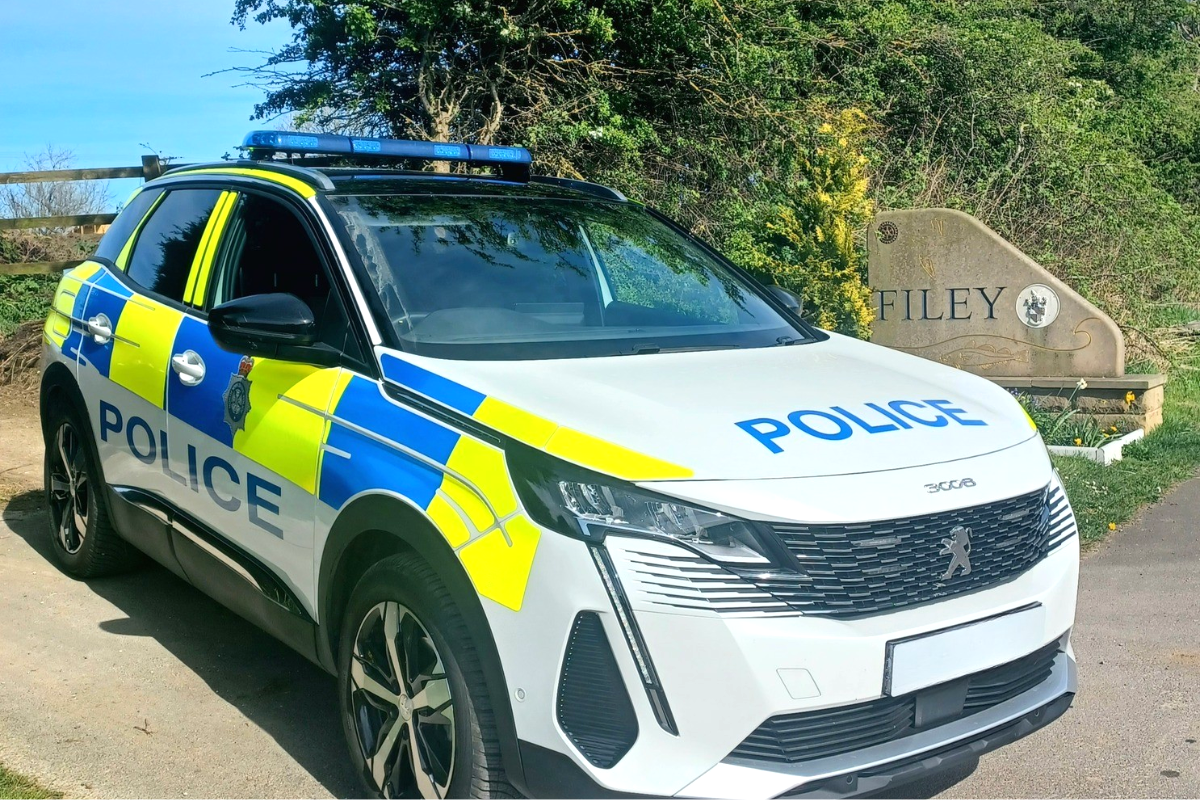 Operation Scooter Targets Moped and Motorcycle Theft in Eastfield and Filey
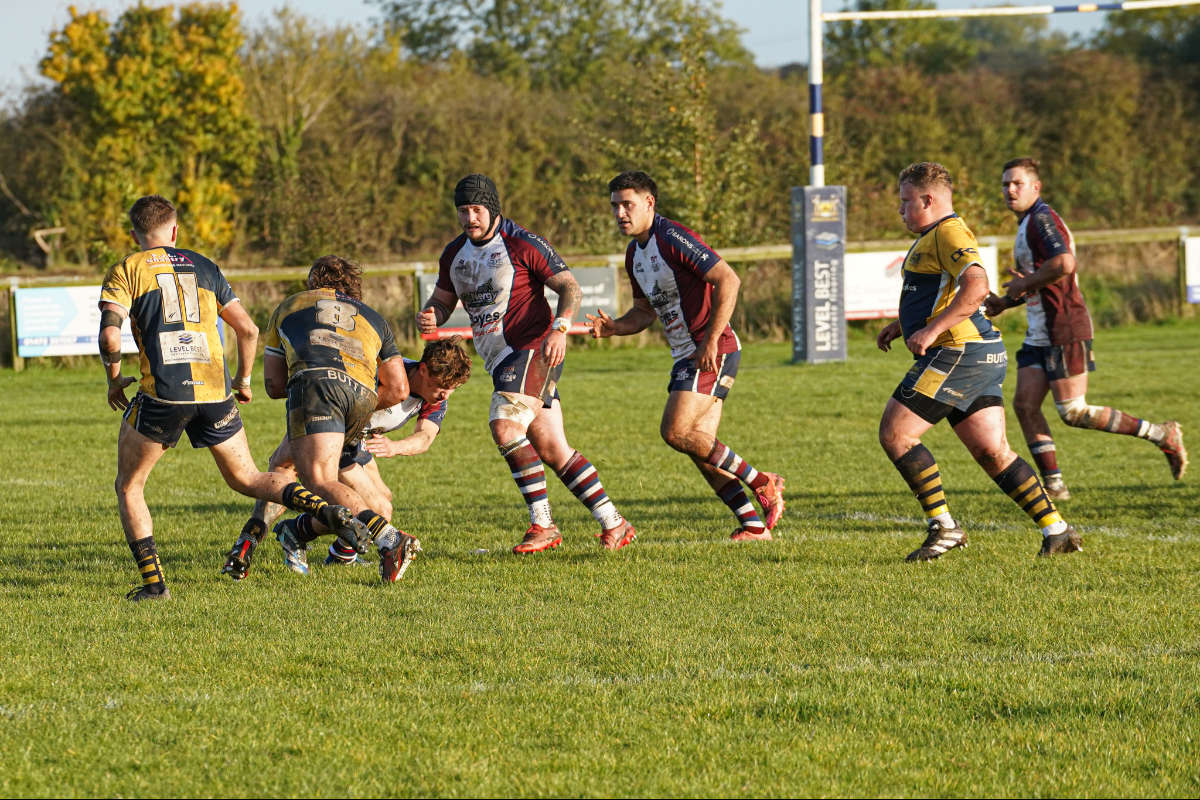 Scarborough and Bridlington Rugby Try To Stay On Top
 Pickering Town's Destination is Doncaster
 Challenges for North Yorkshire Moors Railway as Historic Bridge Repairs Hit Complications
 Goodbye and Thank You to Whitby RNLI Chairman, Mike Major
 Police Appeal After Night-time Assault in Whitby










Comments
Add a comment