


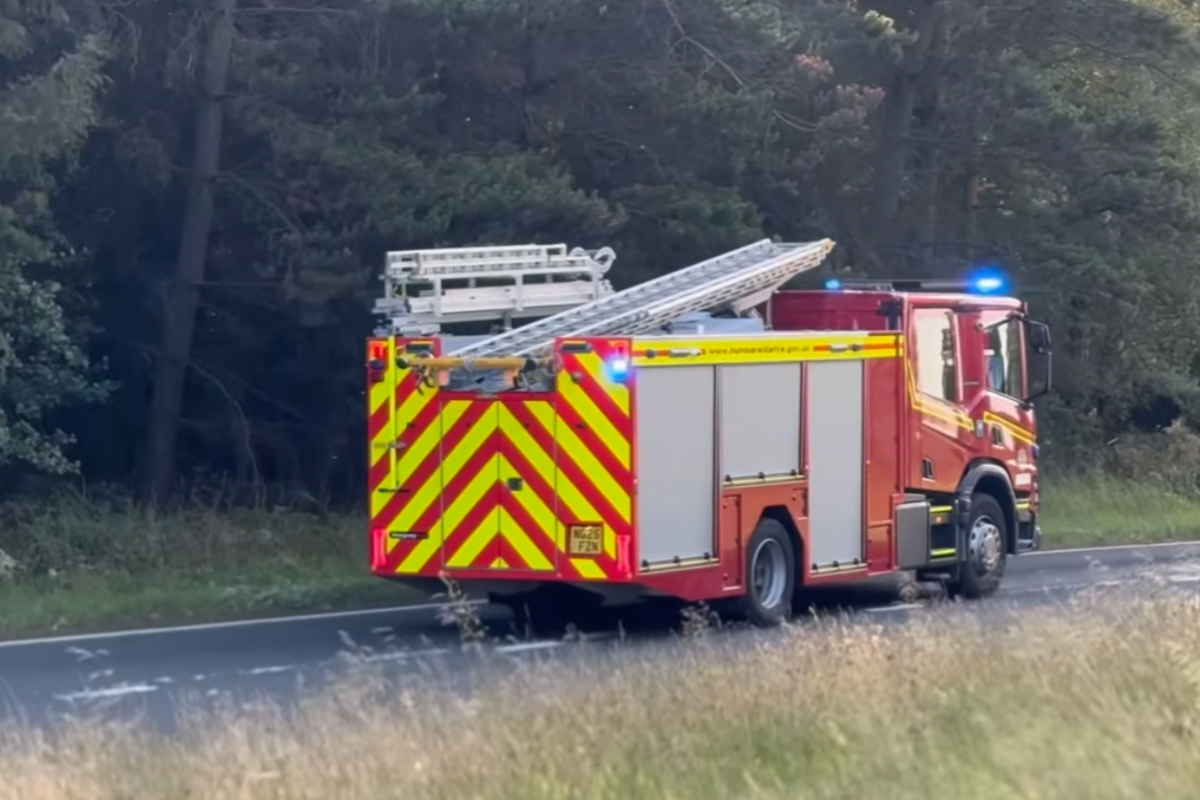
The North Yorkshire Fire and Rescue Service has seen a rise in overall incidents and appliance deployments over the past year, largely driven by an increase in secondary fires and false alarms.
North Yorkshire Fire and Rescue Service has experienced a notable increase in operational demand over the past year, with overall incidents and appliance deployments on the rise.
The details regarding the increased workload were outlined by Ben Illsley, who serves as the Area Manager and Director of Operational Support and Assurance for the North Yorkshire Fire and Rescue Service.
The service has been analysing data from the past year to understand the changing nature of the emergencies they are called to attend, forming part of an annual performance assessment.
According to the data, while certain types of incidents have remained stable, there has been a significant shift in the volume of other callouts, particularly concerning outdoor fires and false alarms.
The number of special services required by the public, which includes responding to road traffic collisions and carrying out lift rescues, has stayed fairly constant year on year.
However, despite concentrated efforts by the service to reduce the frequency of automatic fire alarms, the overall number of false alarms has seen a slight increase.
A major driver of the increased demand has been a substantial rise in the number of fires attended by crews, predominantly categorised as secondary fires.
The summer months proved to be a particularly challenging time for the North Yorkshire Fire and Rescue Service, with July recorded as the busiest period of the previous year.
This busy summer period also included a major wildfire in August, an event that significantly impacted the operational capacity of the service.
Detailing the specific trends observed over the year, Mr Illsley said:
"Special services remained fairly constant, so that's road traffic collisions, lift rescues, other things of that nature. False alarms despite all the work to try and reduce automatic fire alarms has gone up slightly. But the big increase year on year has been in the number of fires that we attend, predominantly secondary fires. So in the summer months, July was our busiest period last year. Everybody watching will recall the major wildfire we had from August last year as well. And it's really pleasing to see that dwelling fires are not in the top five anymore."
The positive news within the operational data is the decline in fires occurring within people's homes, meaning dwelling fires no longer rank among the top five most frequent incidents attended by the service.
Conversely, the service responded to more than one thousand small fires in the open during the same period.
The fire service is now looking ahead to see how they can better prevent these types of outdoor incidents and ensure they are fully prepared to respond to them.
Factors such as climate change and shifts in human behaviour are being considered as potential causes for the rise in these specific types of fires.
Furthermore, crews continue to be dispatched to a significant number of false alarms made with good intent.
These often occur when members of the public spot smoke from a distance, prompting a response from the fire service even when no emergency action is ultimately required upon their arrival.
Summarising the overall situation and the impact on frontline staff, Mr Illsley said:
"So we do still get a significant number of false alarms good intent, where people may see smoke from a distance and then when our crews arrive there's no action required. But fires small in the open, more than a thousand last year. So that's the big thing, whether through climate change, behavioural change, we'll be looking to prevent and need to be prepared for from a response perspective. So the overall summary is the incidents are going up, the appliance deployments are going up, our crews are being busier from an operational capacity. But we have seen a reduction of fires in people's homes."

 Record Multimillion-Pound Investment Promises To Fix North Yorkshire's Roads And Potholes
 North Yorkshire Police Emergency Call Waiting Times Remain Low Despite Surge In Demand
 Row Over £20,000 'Incorrect' Public Toilet Charges in Whitby
 'Strong Fish Smells' Spark Objections To Seafood Business Application
 Maternity And Neonatal Services Face £736,000 Funding Gap To Meet New Safety Standards
 Concerns Raised Over Tourist Tax Powers In North York Moors National Park
 Educational Outcomes For Coastal Children To Receive Major Boost Under New Pilot Scheme
 Special Train Journey Evokes Precious Memories For Dementia Patients On The Yorkshire Coast
 Free Flu Vaccines Will Be Available At Drop-In Clinics Along The Yorkshire Coast
 Extracurricular Opportunities Set To Expand For Pupils In Scarborough And Whitby
 Time-Travelling Children Uncover Scarborough's Geological Past
 Solar Panels Confirmed For Whitby And Eastfield Public Buildings To Cut Energy Bills