

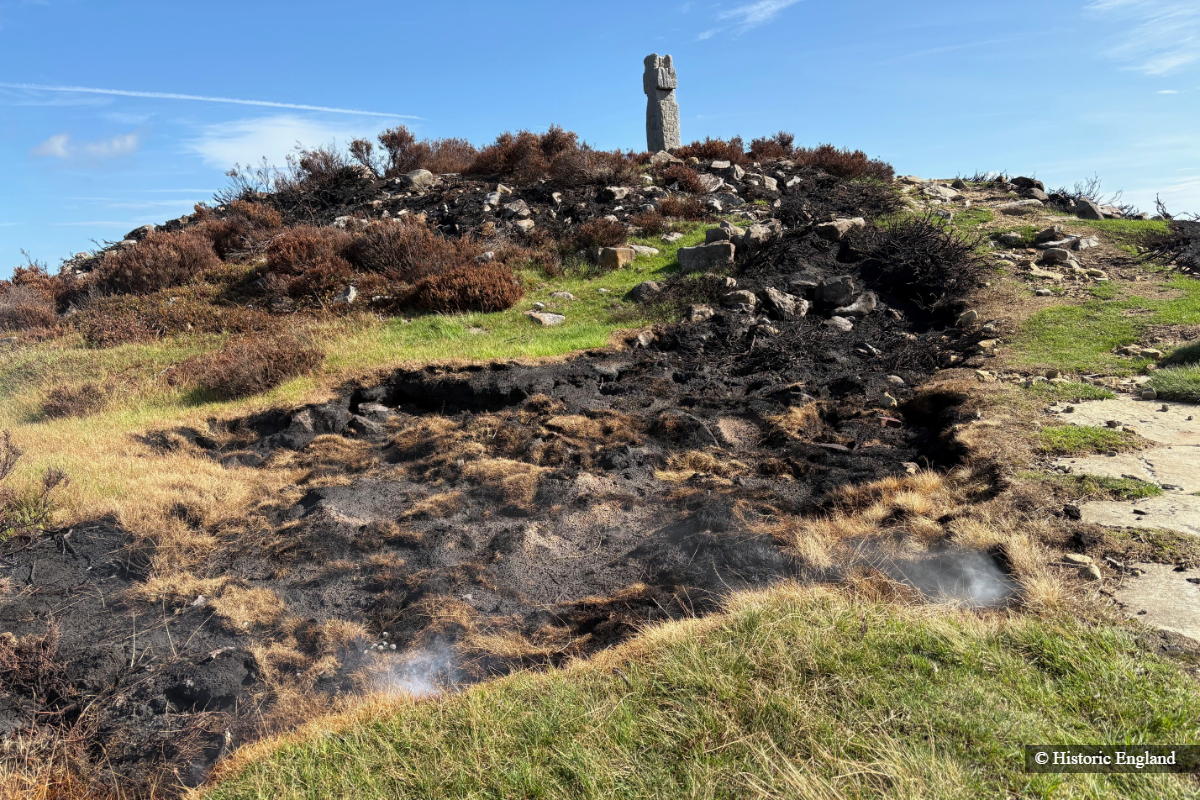
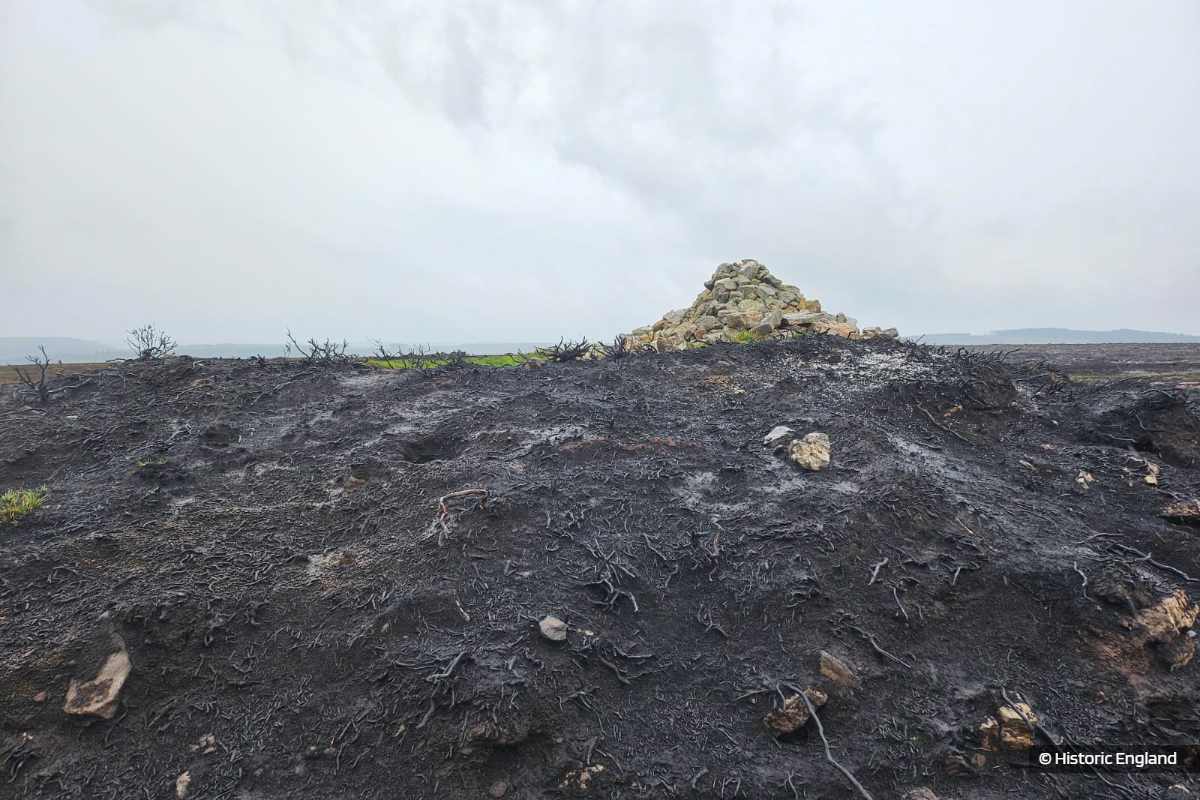
Ten historic monuments on Fylingdales Moor have been added to the Heritage at Risk Register after a massive wildfire stripped away protective vegetation and exposed them to erosion and unexploded ordnance.
Ten ancient monuments on Fylingdales Moor face severe erosion and ordnance threats following a devastating wildfire.
Historic England added the sites to the 2026 Heritage at Risk Register today, warning that the loss of protective peat and vegetation has left the archaeological remains highly vulnerable.
The June 2025 blaze burned across 18 square kilometres of the North York Moors National Park, damaging more than 20 scheduled monuments, six listed buildings, and significant natural peatlands.
Andrew Burn, English Heritage Team Leader Development Advice Yorkshire, explained the purpose of the national listing.
"The Heritage at Risk register is a a list of listed buildings, archaeological monuments, and sites that Historic England understands to be at risk. It's very much a tool, it's a snapshot of the health of those monuments in England, and it allows us to nationally prioritise where we might want to engage, where we might want to support through advice, through funding, and through other avenues in order to make sure that the management of those sites is improved and looked upon favourably in the future."
The addition of so many sites at once highlights the unprecedented severity of the moorland fire.
Mr Burn said the blaze had exposed historical layers that had been safely buried for millennia.
"The area of moorland at Fylingdales hasn't been added, it's the monuments within it that have been added. So, in that sense, in individual case by case basis, it's not unusual, but the number being added to the register at once is unusual and that is down to the unprecedented nature of the event that was faced on Fylingdales last year.
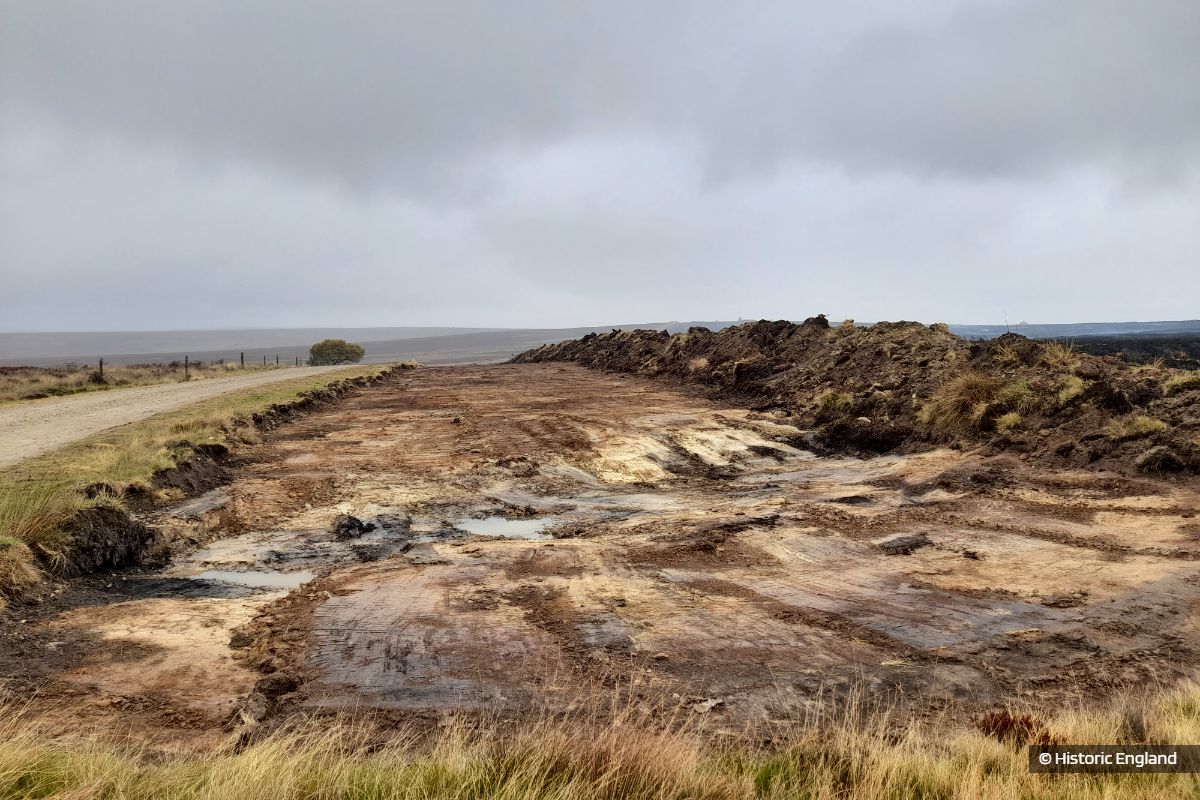
The fire has damaged several monuments by removing their covering of vegetation and peat and exposed archaeological layers in some cases that haven't been exposed for thousands of years and put them at risk of erosion from wind, weather, storms, or just traffic, foot traffic over them."
The disaster caused widespread disruption beyond the historic environment.
Mr Burn emphasised the broader real-world impact on the local community.
"The area of the fire encompassed approximately 18 square kilometres. So, that's a huge area of moorland. And while we are talking about the scheduled monuments from a Historic England point of view, we have to be absolutely clear that this has affected the natural environment. It's affected people's livelihoods. It's affected those that work, and, and live within that area. This is one element of, of a, a much wider issue."
Historic England worked closely with the North York Moors National Park Authority to survey the extensive damage, using drones to help assess the sites.
Mr Burn detailed the results of the recent site assessments.
"Within the area of the fire and the affected area that includes the fire breaks that were excavated to control and contain the fire. There were 38 monuments. Now, not all of those have been added to the register.
What we've done is we've worked closely with the National Park. We've undertaken the site visits. The National Park have been leading with some really innovative drone survey with some capacity building funding from ourselves, and all of this work has gone to assess the condition of these monuments, identify the risks, both imminent and long term, and as such, 10 monuments have been identified as being at risk and five additional monuments have been identified as being vulnerable."
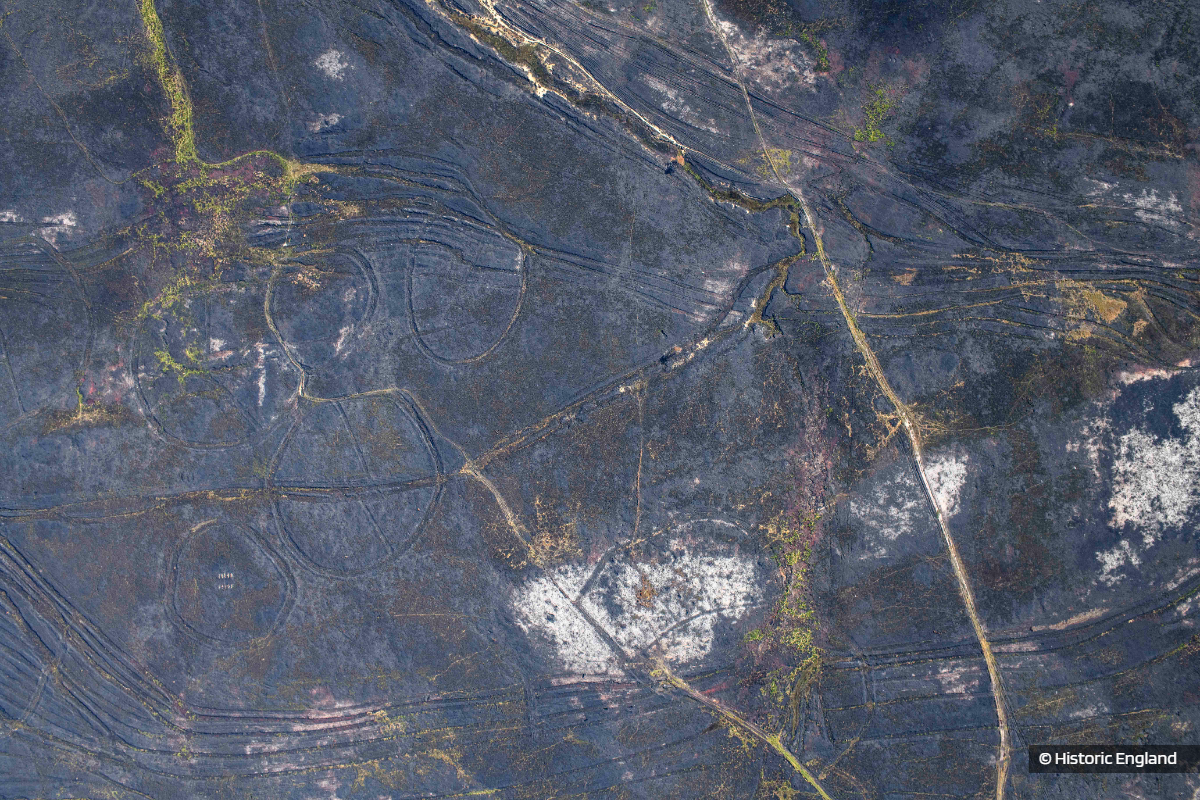
The exposed sites now face a complex combination of modern and historical hazards.
Mr Burn outlined the specific dangers threatening the monuments.
"All of that works has gone into a detailed evaluation of what damage the fire has done, what the condition of the monument is and then what are the risks. So is there a footpath over it that might lead to greater erosion, is there a risk from grazing once grazing returns to the moor, vehicle traffic, but also one of the big issues up there is unexploded ordnance from the former military firing ranges and the fire itself had affected a lot of ordnance that was in the ground and that is also a risk to the monuments themselves."
Adding the sites to the register will help unlock conservation funding and guide future recovery strategies.
Mr Burn highlighted the benefits of raising the profile of the Fylingdales monuments.
"There's a number of benefits. The first one is just to highlight local issues. Obviously, the Fylingdales Moor is a huge local story, but it helps to highlight it both in the national climate change discussion, um but also at a national level for highlighting the challenges faced by local residents, landowners, managers because while the historic environment is one part of this, there's a much bigger story here. So a lot of people access the heritage at risk register. So by highlighting the issues that the historic environment is faced through that, people can find out about the broader picture. So that is one one role.
There are opportunities for funding as well in terms of localised conservation work. We can help highlight that.
But I think the the biggest thing as well is it helps us really focus our engagement and advice where it can have the best value and the best impact. So by having this list and doing this health check, we can really make sure that we work closely with stakeholders and partners to get the best outcome for archaeological sites, like Fylingdales, but also listed buildings and other sites as well, to make sure we're working in partnership to secure the best possible outcome."
Historic England provided a £100,000 capacity-building grant to support the surveying of the sites which included funding drone technology.
Mr Burn explained how this funding has driven rapid data capture across the moorland.
"It's something that we've used for a long time in house at Historic England for conducting archaeological surveys at a landscape level. But what we were able to do because of the the risk to the monuments up there and the size of the area that was affected, we released 100,000 pounds of capacity building funding for the national park and part of that was to build in a couple of posts that were meant that they could have dedicated staff undertaking drone survey.
Part of it was to do with the equipment to undertake it and part of it was to do with the software and the kit for processing all the data as well. And basically all of that came together to allow rapid data capture of sites and monuments. Not just the scheduled sites, not just the monuments that we're identifying as being added to the heritage at risk register, but new monuments and previously unidentified archaeological remains as well.
So it's been a hugely valuable piece of work and what is happening now is it's all going into helping develop the strategy for recovery and regeneration and future management.
So obviously our role within that is very focused on the scheduled sites, and the national park are already undertaking some fantastic conservation work to help stabilise these sites with the view that hopefully in a year or two years they can come off the heritage at risk register because of that valuable work. This is all the reason that were highlighting these is so that we can focus again engagement and conservation work on these sites."
The National Park Authority continues to lead the on-the-ground conservation efforts.
Mr Burn praised the local authority's commitment to restoring the damaged landscape.
"While we're offering advice guidance and we've released the funding that the good hard work is being done by the National Park. They are so committed to securing a positive outcome in the face of a really huge environmental catastrophe. And they are really doing so much of the work and, you know, yes, we're providing advice, yes, we're providing funding, yes, we're trying to highlight the issues. But yeah, the the National Park are are a fantastic stakeholder to work with, because it it is front and centre of the issues they want to tackle."
Across Yorkshire and the Humber, 17 historic sites joined the Heritage at Risk Register this year. Historic England spent £1.07 million in grants across the region during the 2025 to 2026 period to support vital repairs and conservation work.
Claudia Kenyatta CBE and Emma Squire CBE, Co-CEOs of Historic England, said:
“Our historic buildings and places help tell the story of where we live and contribute to the character and identity of local communities. Each year, the Heritage at Risk Register showcases the positive impact that restoring and reusing these special places can have.
“The most effective way to protect our buildings is to bring them back into use as places that create connection and enjoyment for local people. The sites saved and removed from the Register this year show what can be achieved when partners and communities work together to deliver positive, lasting change. By working together, we can protect our heritage for generations to come.”
Historic England’s Heritage at Risk Capital Fund, which is funded by the Department for Digital, Culture, Media and Sport supports the repair and conservation of historic buildings and sites at risk across England. The Places of Worship Renewal Fund, also delivered by Historic England and funded by the Department for Digital, Culture, Media and Sport, is designed to support the repair of England's treasured places of worship and targeted at places of most need.
The Countryside Stewardship Heritage Service partnership between the government and Historic England supporting sustainable land management to protect our shared heritage for future generations.
Heritage Minister Baroness Twycross said:
"Every part of the UK is bursting with history, so it is vital we protect the heritage sites at the heart of communities which help tell the stories of our nation. That’s why our £1.5 billion Arts Everywhere Fund is so important, supporting efforts to save more than 1,000 arts venues, museums, libraries, and heritage buildings across England.
“This year’s register is an important reminder of the pressures facing our historic environment, from ageing buildings and structural deterioration to the impacts of extreme weather. I want us to build on our progress to ensure our heritage is protected for generations to come.”

 Investors Tour Scarborough On Bonfire Night To Spark Regeneration
 Overnight Visitor Levy Moves Closer Despite Coastal Business Fears
 Major Funding Boost Secures Scarborough Festivals And Theatre Improvements
 Major Milestone Reached in £25m Scarborough Hospital Lab Project
 MP Likens Yorkshire Water Leadership Change to 'Shuffling Deckchairs on the Titanic'
 Gas Company Launches Appeal Against Scarborough Drilling Rig Refusal
 Calls For Yorkshire Water To Return To Public Ownership Following 335 Pollution Incidents
 Volunteers And Companions Will Celebrate Friendship With Special Afternoon Tea In Scarborough
 £2.5m Project Approved to Replace Cremators at Scarborough's Woodlands Crematorium
 Thirteen-Year-Old Photographer Lands Volunteer Role on the Yorkshire Coast Railway
 Scarborough School Pupils Celebrate Pergola Win
 Government Faces Renewed Pressure Over Wildfire Preparedness After Fylingdales Blaze