


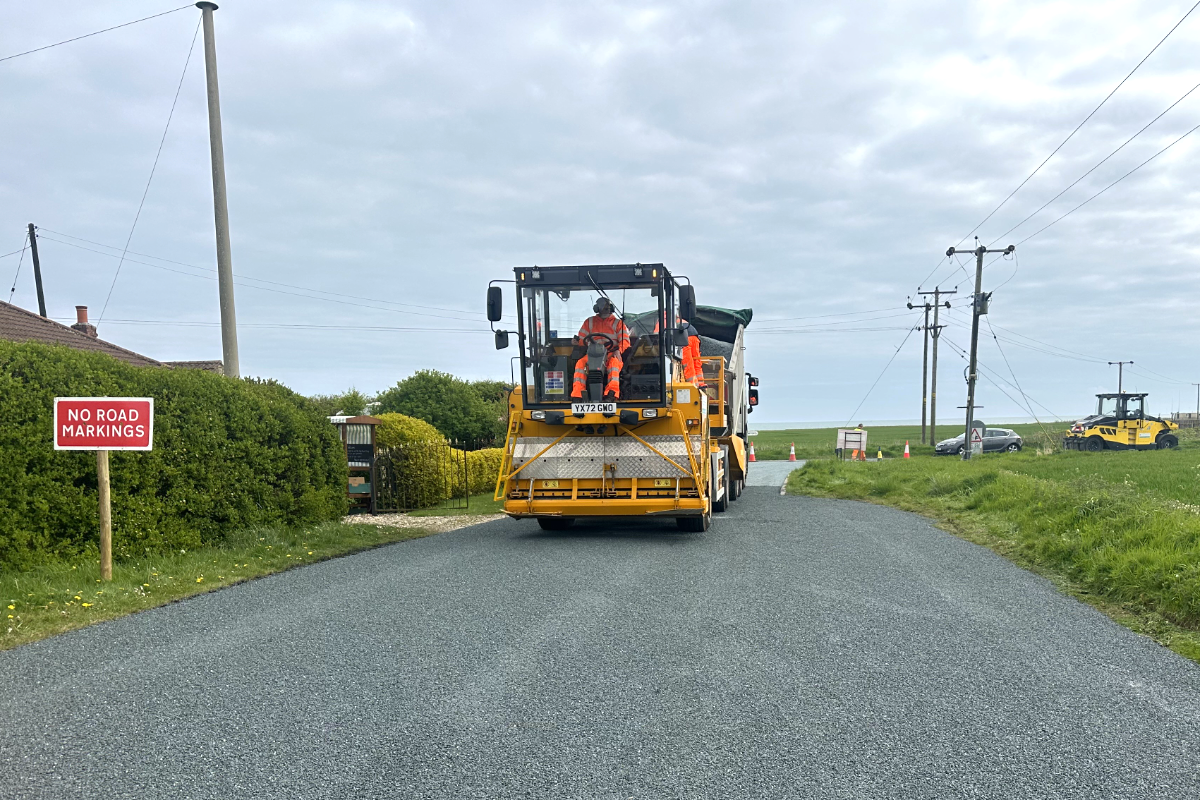
East Riding of Yorkshire Council is investing £3.5 million in a massive spring and summer road surface dressing programme designed to protect against potholes.
East Riding of Yorkshire Council has announced a major financial investment of £3.5 million to improve and protect roads across the region this spring and summer.
The local authority's annual road surface dressing programme is officially scheduled to begin on Wednesday, 22 April, and is expected to take sixteen weeks of dedicated work to complete.
According to the council, the comprehensive scheme will cover all types of roads across the East Riding, ranging from major A-roads down to smaller unclassified routes.
In total, one hundred and sixty-six individual sections of the network will be upgraded, which the council states is equivalent to treating sixty-eight miles of highway.
The extensive maintenance operation will see approximately 700,000 square metres of stone chippings laid onto local road surfaces.
To put the sheer scale of the project into perspective, the council noted that this amount of material is comparable to surfacing a continuous route spanning all the way from Beverley to Hartlepool.
East Riding of Yorkshire Council explained that surface dressing is a highly fast and cost-effective method of repairing, preserving, and significantly prolonging the lifespan of a road.
The essential work is being carried out entirely by the council’s own dedicated highways maintenance team.
The procedure consists of applying hot, adhesive bitumen directly to the road surface, covering it with the stone chippings, and then using heavy machinery to roll them firmly into place.
Following this initial application, mechanical road sweepers are deployed to safely clear away any remaining loose chippings after a few days, and new road markings are put down as quickly as possible to restore normal driving conditions.
The local authority claims that this specific process actively reduces the risk of dangerous potholes forming because it effectively seals the road, preventing water from entering and damaging the underlying surface.
Additionally, the council asserts that the surface treatment significantly improves overall skid resistance for vehicles.
The maintenance programme is strictly carried out during the spring and summer months because the process requires warmer ambient temperatures for the bitumen and chippings to bond effectively.
Councillor Paul West, the council’s cabinet member for environment and transport, addressed the public regarding the upcoming works.
Councillor Paul West said:
"We really appreciate drivers and local residents for bearing with us over the next few months while our crews carry out this essential work to improve our roads.
Surface dressing is an extremely important part of our annual maintenance programme because it helps to protect these roads from potholes and other damage."
During and immediately after the essential maintenance work, temporary 20mph speed limits will be strictly enforced on the treated roads.
The council stated that these limits are necessary to reduce the risk of vehicles skidding on loose chippings and to minimise the likelihood of stones being dislodged and flicked up by passing traffic.
These temporary speed restrictions will be completely removed once the new road markings have been safely installed.
While disruption to traffic will be kept to an absolute minimum, the council is actively urging drivers to respect the 20mph speed limit to protect both the travelling public and the local authority's workforce.
Residents and drivers will be kept fully informed before any works begin in their immediate area.
The council confirmed that an informational leaflet will be sent to all residents who may be directly affected by the maintenance, and advance warning signs will be installed on the roads beforehand.
In a bid to remain environmentally friendly and cost-efficient, the local authority has confirmed that any loose stone chippings left behind after the surfacing dressing is complete will not go to waste.
Mechanical road sweepers are used to collect all the loose chippings, which are then carefully stored by the highways team.
Every two years, East Riding of Yorkshire Council hires a giant industrial washing and grading machine to thoroughly clean all the loose chippings so they can be recycled and reused on the region's roads the following year.
According to the council, this innovative recycling process successfully reuses more than 7,000 tonnes of chippings and saves approximately £60,000 of council taxpayers’ money.

 Nine Minutes from Glory: Heartbreak for Boro as Macclesfield Snatch Late Replay
 East Riding Mum Ventures Change To System After Second Term Time Holiday Fine
 North Yorkshire Faces Major Challenge to Prepare Local Plan in 30 Months
 Pre-Halloween Spooktacular Will Raise Vital Funds For Scarborough Hospice
 Did You See East Riding Bridge Colission?
 Scarborough Foster Couple To Run New Support Hub For Vulnerable Children
 Bridlington Town Back To Winning Ways
 Yorkshire Coast Rugby Round Up
 Pickering Town Back Into Top Ten With Victory
 Record Numbers Of Young People Explore Future Careers At East Yorkshire Apprenticeship Expo
 Historic Sleights Pub Set To Reopen Under New Local Ownership
 Patients Could Opt Out of Care Over NHS Data Platform Fears, Councillors Warned