

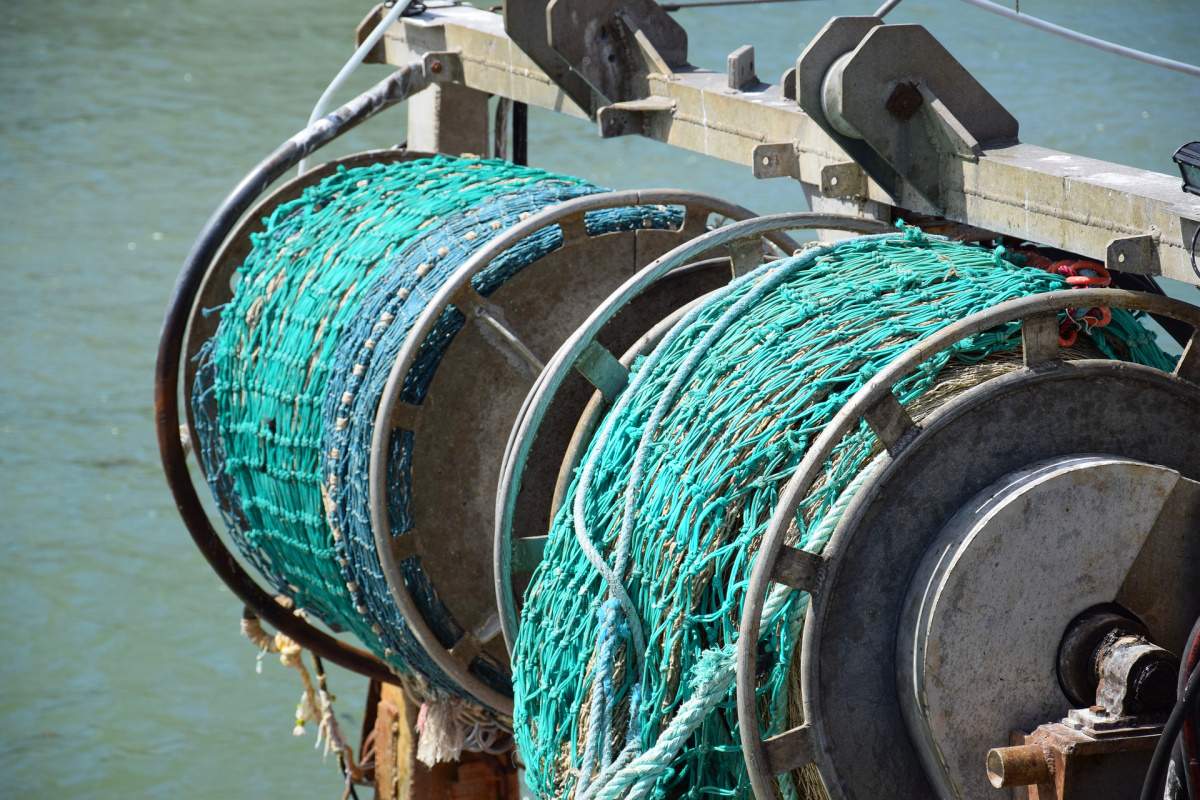
Proposals designed to make the fishing industry on the Yorkshire Coast safer come into force today.
The Maritime & Coastguard Agency (MCA) Code of Practice for Small Fishing Vessels (less than 15 metres length overall) now includes a requirement for fishing boats to be inspected both in and out of the water every five years.
Previously, the requirement was only for fishing boats to be inspected in the water when first joining the UK Ship Register and after that inspected either in or out of the water once every five years.
This is part of ongoing work by the MCA and its partners in the Fishing Industry Safety Group to help reduce the number of deaths in the industry.
Between 2012-2020 there were 52 fishing fatalities which translates to a figure of 50 fishermen in every 100,000 losing their lives at work. To put it in perspective, the national average across all sectors is 0.5 fatalities per 100,000.
There are about 12,000 fishermen and 5,400 fishing vessels in the UK fleet.
David Fenner, who heads up the fishing safety section at the MCA, said:
“Fishing is one of the most dangerous industries with the rate of fatalities being approximately 100 times higher than that of the UK general workforce. These requirements are about making and bringing about changes that improve safety for those working at sea.”
The new code addresses crew protection and man overboard recovery, construction, watertight and weathertight integrity, stability, machinery, electrical installations and in and out of water inspections.
He added:
“These proposed requirements will bring big changes and safety improvements, there are now stability requirements for new and existing vessels, whilst vessels built to a standard have to be maintained to that standard and those that were not have to demonstrate they are safe and fit for purpose. We know that the fishing industry faces a number of challenges to comply with this code but it’s been written so that responsible owners will already be complying with many aspects of it.
“Ultimately though, there have been too many deaths and we want to make sure we’ve done all we can to reduce that risk with an enforceable code. The sea is dangerous and we want to make sure we do all we can to protect those who work in it.”
Fishing is the most dangerous industry with the rate of fatalities being approximately 100 times higher than that of the UK general workforce.
Approximately 65 per cent of deaths to fishing vessel crew and 69 per cent of fishing vessel losses between 2009 and 2020 were on vessels under 15 metres; these are most likely to be small and micro businesses.

 Record Multimillion-Pound Investment Promises To Fix North Yorkshire's Roads And Potholes
 North Yorkshire Police Emergency Call Waiting Times Remain Low Despite Surge In Demand
 Row Over £20,000 'Incorrect' Public Toilet Charges in Whitby
 'Strong Fish Smells' Spark Objections To Seafood Business Application
 Maternity And Neonatal Services Face £736,000 Funding Gap To Meet New Safety Standards
 Concerns Raised Over Tourist Tax Powers In North York Moors National Park
 Educational Outcomes For Coastal Children To Receive Major Boost Under New Pilot Scheme
 Special Train Journey Evokes Precious Memories For Dementia Patients On The Yorkshire Coast
 Free Flu Vaccines Will Be Available At Drop-In Clinics Along The Yorkshire Coast
 Extracurricular Opportunities Set To Expand For Pupils In Scarborough And Whitby
 Time-Travelling Children Uncover Scarborough's Geological Past
 Solar Panels Confirmed For Whitby And Eastfield Public Buildings To Cut Energy Bills










Comments
Add a comment