


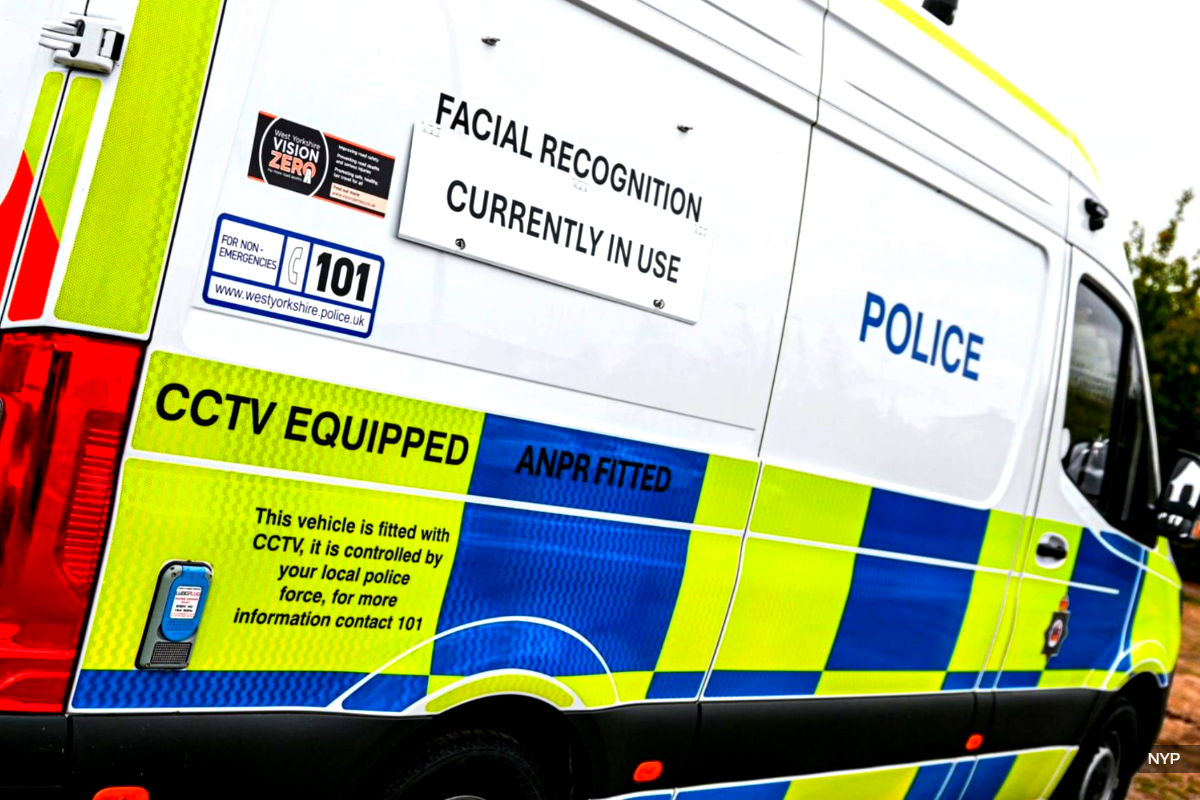
Live facial recognition technology will scan public areas across North Yorkshire in the coming months to identify wanted criminals and protect vulnerable people.
Live facial recognition cameras will scan crowds across North Yorkshire in the coming months to identify wanted criminals and protect vulnerable people.
Police chiefs confirmed the rollout of the technology, which compares live video footage against a bespoke watchlist of individuals.
Chief Constable Tim Forber backed the rollout:
"I am keen to get on with this. I think it's a really important technology. I do expect it to be used in North Yorkshire in in the coming months.
And I think it is an important tool in terms of making sure that people who who are wanted, who do present a threat to the communities of North Yorkshire are identified as quickly and as simply as possible and we but we do that in a way that is transparent so the public can see it."
The system will alert officers when a potential match passes a camera. Human operators will then review the footage before deciding whether to intervene.
Detective Chief Constable Jez Bartley outlined how the system operates in practice:
"So it it will take a a a snapshot of a subject's face and then match that to the watch list to see whether the algorithms meet and then that will then flag up to an operator in the van who will have that human eye and decision-making over whether they put that out to the engagement officers outside of the van, that are positioned to engage in man in a red top, please stop that person he's wanted for burglary, potentially.
And then they will then do their due diligence as they would on the streets if they stopped someone they thought was wanted for whatever offence or to prevent something, someone from entering an area.
The force will explore several different facial recognition technologies.
Explaining the options, Mr Bartley said:
"So live facial recognition it is what we're looking to develop and utilize in the coming months. and that is really where we have a live stream, a footage that captures images of people walking past and then that is matched against a watch list of people who are wanted.
Then you've got retrospective facial recognition which is where we might get a picture of a burglar on CCTV and we'll run that through our systems and the police National database to be able to identify that person.
And then the last one is officer initiated facial recognition which is where an officer on the street who is speaking to a subject can take a picture of that person and then that searches our National Police database to see whether that person's wanted, to ID them or any of the other safeguards that are in place.
That is being tried in South Wales when and the metropolitan police at the moment we don't have that capability.
The technology will target specific individuals rather than conducting mass surveillance.
He detailed the criteria for its use:
"The most likely use of it would be to identify those wanted for criminal offences or by the courts, but it can also include preventative measures. So, for example, prevent people from entering areas. An example that might be football banning orders, but also to locate people where intelligence suggests that they might be vulnerable or at risk at harm as well.
So you high risk missing people, potential people on registered sex offenders, orders, and things like that that we might want to prevent from going to certain events for a safety element. And also if we know that there's an incident going to occur that could involve violence, then we could deploy to that to be able to use it as a preventative measure.
Privacy measures will ensure the immediate destruction of biometric data for anyone not on a watchlist.
Detailing the automatic deletion process, Mr Bartley said:
"What happens if I walk through the field of vision and I'm captured, what happens to my image? Well, that image, if you don't match the watch list, is deleted in point two of a second. So that's a fifth of a second. And there's no way we can get that back. It's gone.
It's set to that default on the system on purpose to maintain the public support and anonymity so that we won't be able to go back and say, oh, did that person walk past that or was it captured, his biometrics or their biometrics captured?
Human oversight remains a key component of the new system, with officers retaining the ability to halt the operation if necessary.
He said:
"It can be turned off at any point. So if we feel that for whatever reason there's some errors with the readings or there's a threat to people's safety or the van's safety, then we can close that down immediately and cease operating so that there won't be any further errors if that's what we're looking for or any other safeguarding issues."
Residents will receive advance notice of where and when the cameras will operate.
Mr Bartley promised transparency for future operations:
"There will be public notification so that we'll have a live facial recognition North Yorkshire webpage that will publish our up and coming deployments.
It will show the results that we have, the analysis of those results and also have a direct email address to come into the team to be able to answer those questions."
Civil liberties and data storage will face independent scrutiny as the rollout progresses.
Deputy Mayor for Policing, Fire and Crime Jo Coles sought formal assurances regarding the potential for mission creep, noting that police must explore new tools to keep people safe provided robust safeguards remain in place.

 Record Multimillion-Pound Investment Promises To Fix North Yorkshire's Roads And Potholes
 North Yorkshire Police Emergency Call Waiting Times Remain Low Despite Surge In Demand
 Row Over £20,000 'Incorrect' Public Toilet Charges in Whitby
 'Strong Fish Smells' Spark Objections To Seafood Business Application
 Maternity And Neonatal Services Face £736,000 Funding Gap To Meet New Safety Standards
 Concerns Raised Over Tourist Tax Powers In North York Moors National Park
 Educational Outcomes For Coastal Children To Receive Major Boost Under New Pilot Scheme
 Special Train Journey Evokes Precious Memories For Dementia Patients On The Yorkshire Coast
 Free Flu Vaccines Will Be Available At Drop-In Clinics Along The Yorkshire Coast
 Extracurricular Opportunities Set To Expand For Pupils In Scarborough And Whitby
 Time-Travelling Children Uncover Scarborough's Geological Past
 Solar Panels Confirmed For Whitby And Eastfield Public Buildings To Cut Energy Bills