
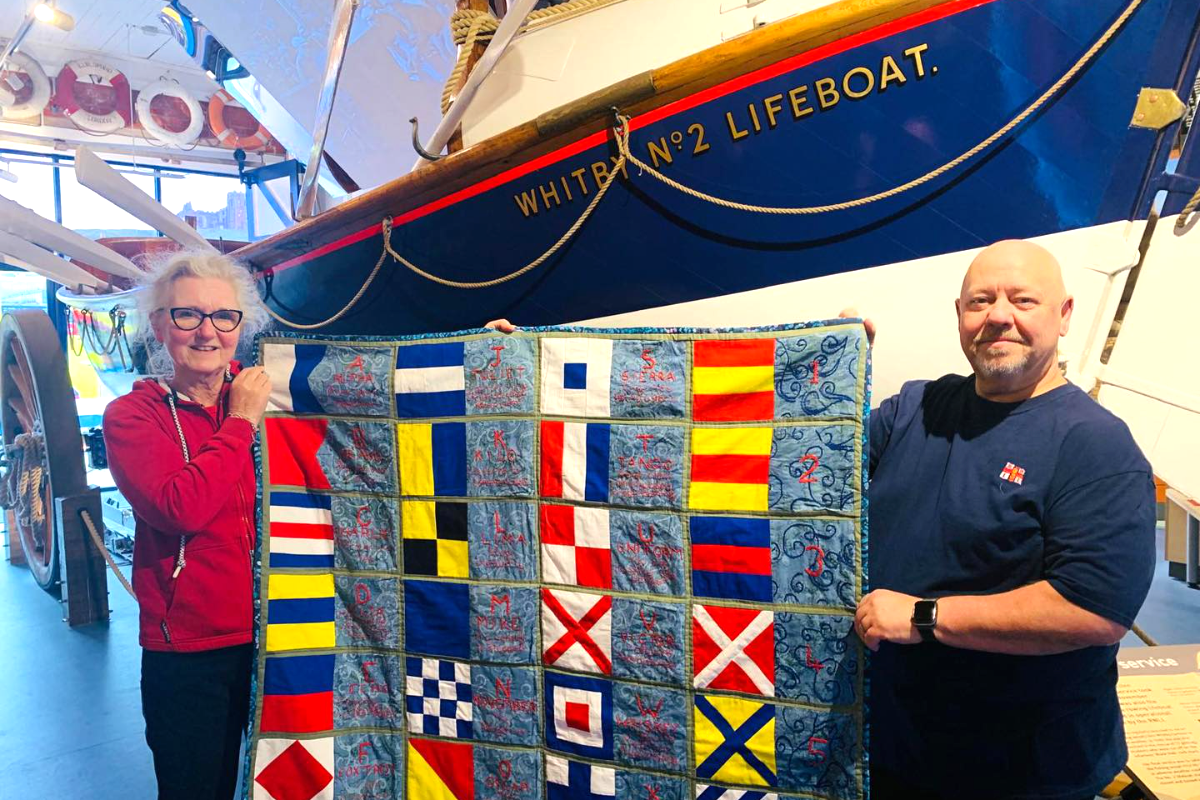
A woman whose grandfather was rescued from the tragic 1914 wreck of the hospital ship Rohilla has donated a handmade maritime quilt to the Friends of Whitby Lifeboat.
Lu McCaskill has presented a unique, handmade quilt to the Friends of Whitby Lifeboat in an emotional tribute to the rescuers who saved her grandfather's life over a century ago.
Accompanied by her sister Nicola, Ms McCaskill visited the Whitby Lifeboat Museum to hand over the donation, which she described as a real labour of love.
The quilt is intricately crafted from international maritime signal flags. Each flag is accompanied by an embroidered meaning, carefully stitched into its adjoining panel.
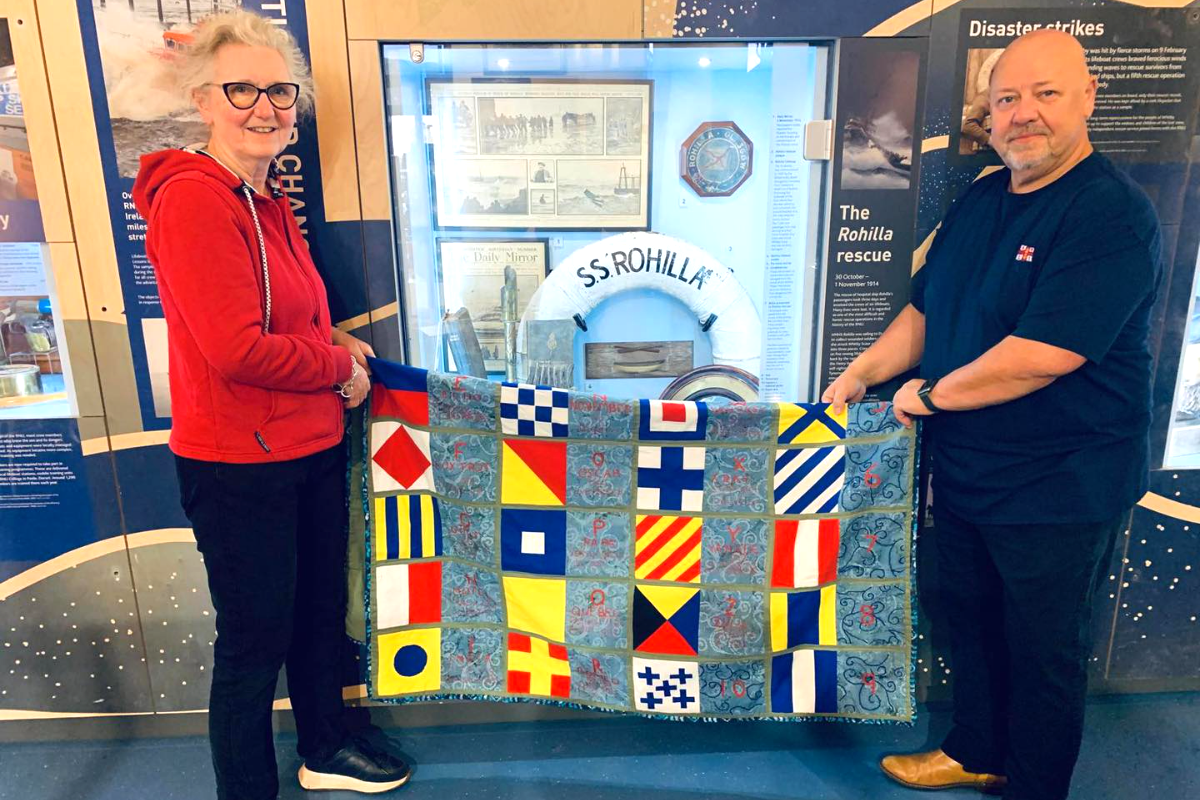
The donation follows Ms McCaskill's discovery that her grandfather, Herbert (Jock) Leith Murray, was among those rescued from the devastating wreck of the HMHS Rohilla off the Whitby coast in 1914.
Ms McCaskill noted that she and her sister would not be here today without the bravery and dedication of the Royal National Lifeboat Institution and the good people of Whitby.
A spokesperson for the Friends of Whitby Lifeboat said:
"It’s an amazing thing to consider the number of people of whom this may be true, and a stark and wonderful reminder of the true impact of the RNLI throughout its history. Thank you Lu - we will use this gift wisely in raising funds for Whitby Lifeboat."
The HMHS Rohilla was originally a passenger steamer built by the British India Steam Navigation Company for service between the UK and India, and also served as a troopship. At the outset of the First World War, the vessel was called up and converted into a naval hospital ship, though she had only a short life in that role.
On the 30th of October 1914, the Rohilla was sailing from South Queensferry on the Firth of Forth towards Dunkirk to evacuate wounded soldiers. During a full north-north-east gale, and with local lighthouses unlit due to the war, the ship ran aground on Saltwick Nab, a reef about a mile east of Whitby.
The reef sits approximately 400 yards offshore, and the stranded vessel soon broke her back in the raging seas. Rescue conditions were extremely difficult, prompting a massive response from the RNLI.
In total, six lifeboats were called to the scene. These included the John Fielden and Robert and Mary Ellis, alongside Whitby No.1 and No.2. The William Riley of Birmingham and Leamington was launched from Upgang, and the Queensbury arrived from Scarborough.
Two motor lifeboats were also dispatched: the Bradford from Teesmouth and the Henry Vernon from Tynemouth. The Bradford was being towed to the scene by a Teesside Harbour tugboat when she developed a serious leak and was forced to return to Middlesbrough.
Ultimately, it was the Henry Vernon that managed to close on the wreck and take off the final souls. Over the course of three days, lifeboats rescued many passengers, while others were saved after attempting to swim to shore.
The wreck resulted in the loss of 83 lives. However, 146 of the 229 people on board survived the ordeal. Among the survivors were Captain Neilson, all of the nurses, and Mary Kezia Roberts, who was already a survivor of the Titanic disaster. The ship was later salvaged out of the water by James Weatherill.
Following the tragedy, Captain Neilson stated his belief that the ship had struck a mine before grounding. An inquest jury exonerated him from all blame. The jury recommended that all passenger vessels should carry rocket apparatus, rather than relying on rockets fired from the shore, and advised that a motor lifeboat be permanently stationed at Whitby.
The heroism displayed during the rescue was heavily recognised. The RNLI presented its highest honour, the Gold Medal, to Whitby Coxswain Thomas Langlands, as well as to Superintendent Major H. E. Burton and Coxswain Robert Smith of the Tynemouth lifeboat.
In 1924, Major Burton and Coxswain Smith were also awarded the Empire Gallantry Medal, which was subsequently changed to the George Cross.
To commemorate all those who lost their lives in the tragedy, a monument was erected at Whitby Cemetery in 1917 by the British India Steam Navigation Company.

 Nine Minutes from Glory: Heartbreak for Boro as Macclesfield Snatch Late Replay
 East Riding Mum Ventures Change To System After Second Term Time Holiday Fine
 North Yorkshire Faces Major Challenge to Prepare Local Plan in 30 Months
 Pre-Halloween Spooktacular Will Raise Vital Funds For Scarborough Hospice
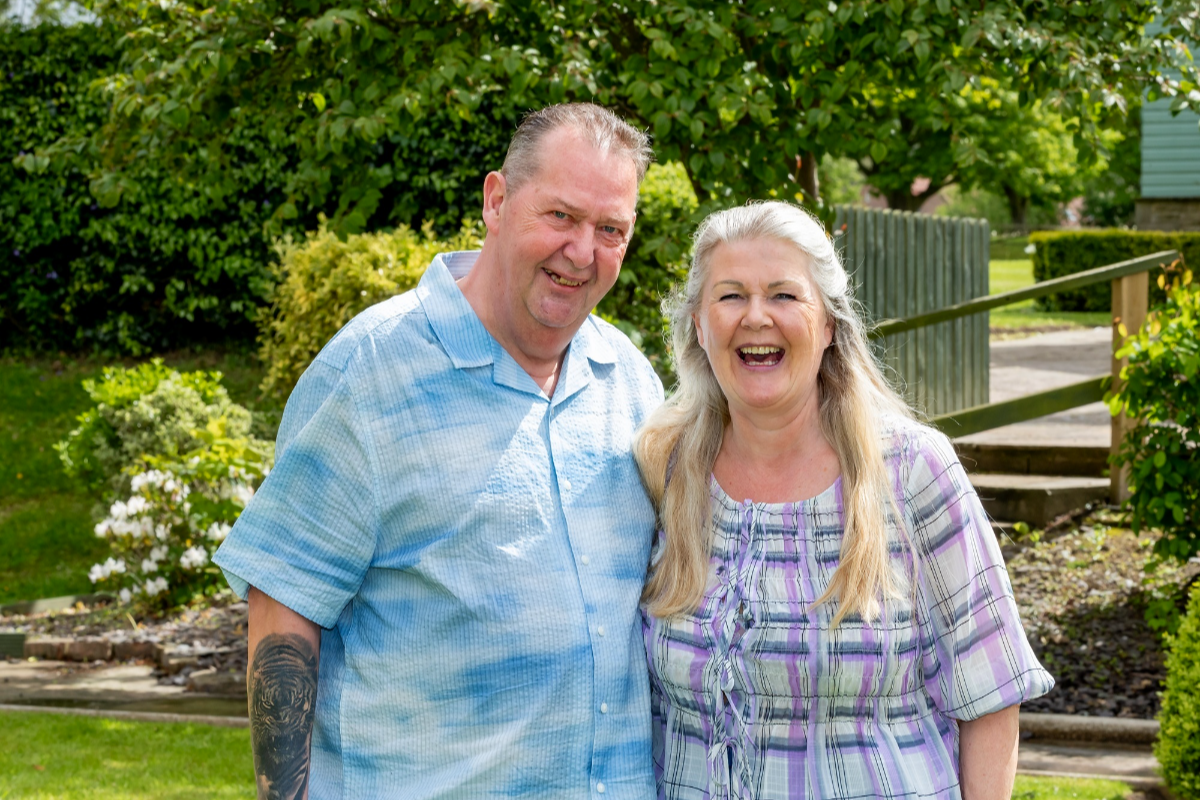 Scarborough Foster Couple To Run New Support Hub For Vulnerable Children
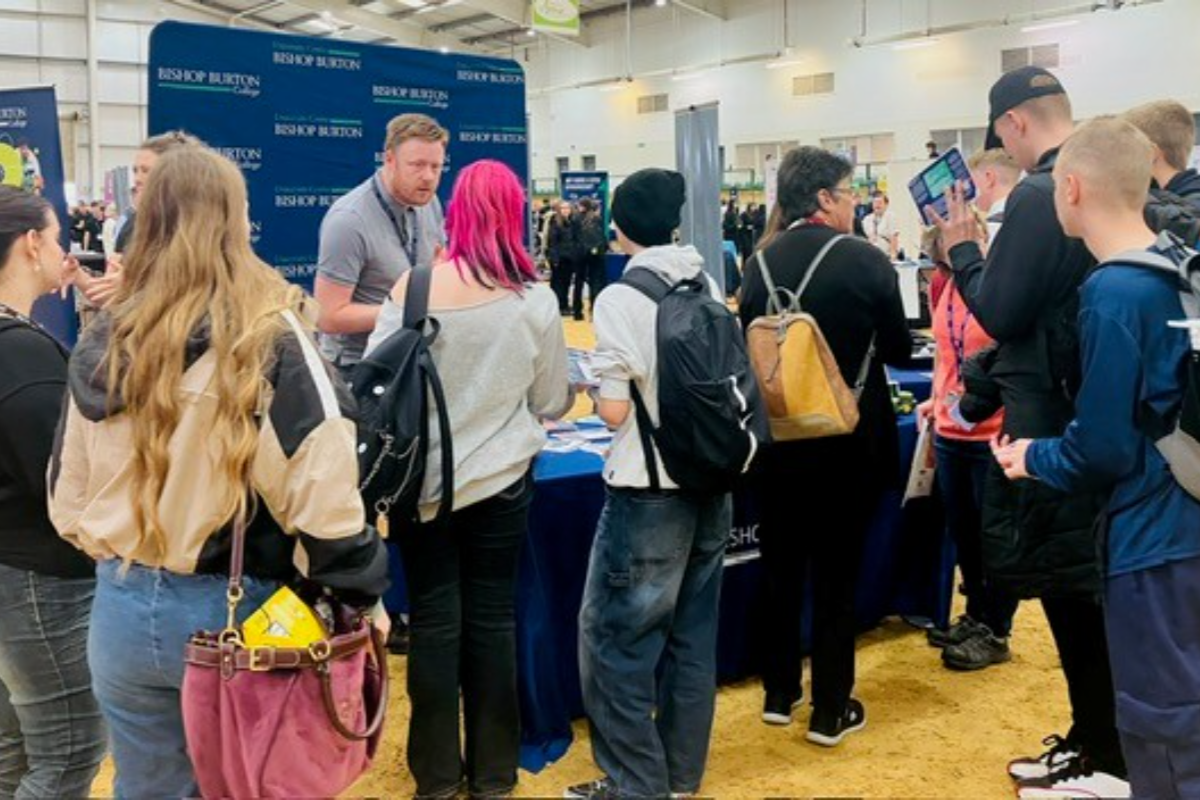 Record Numbers Of Young People Explore Future Careers At East Yorkshire Apprenticeship Expo
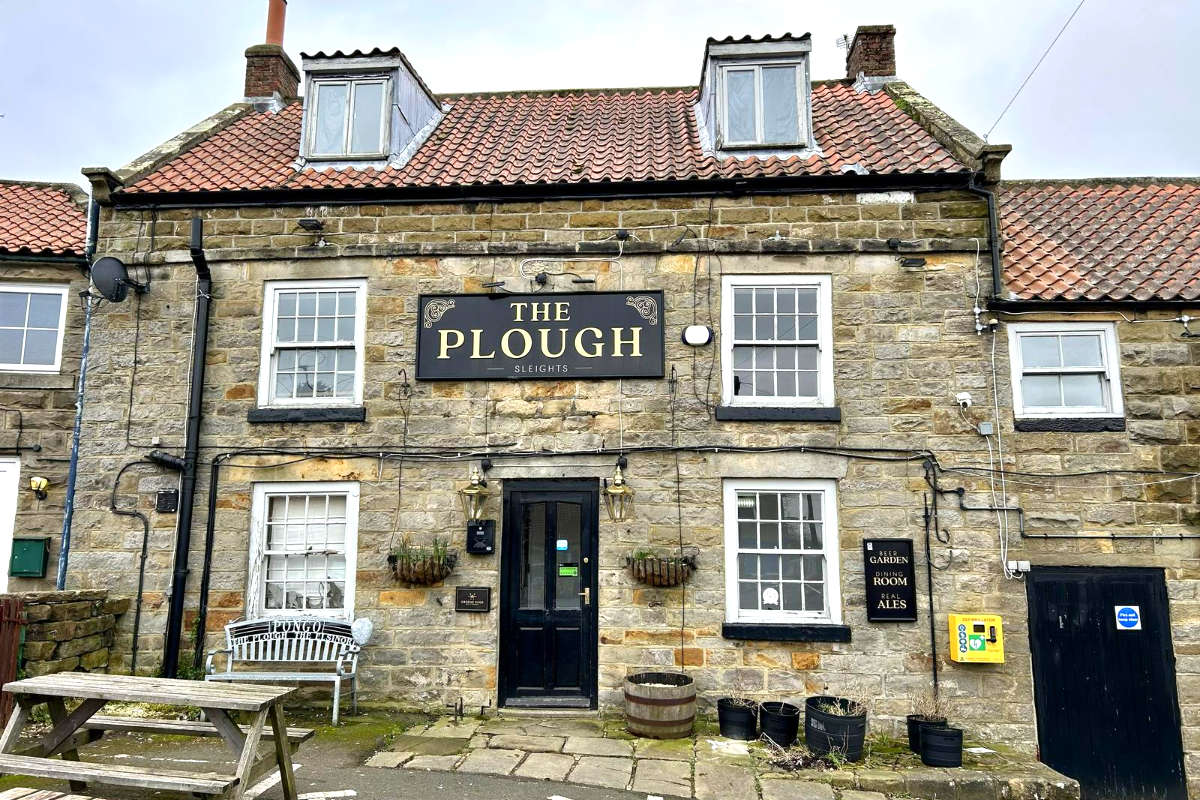 Historic Sleights Pub Set To Reopen Under New Local Ownership
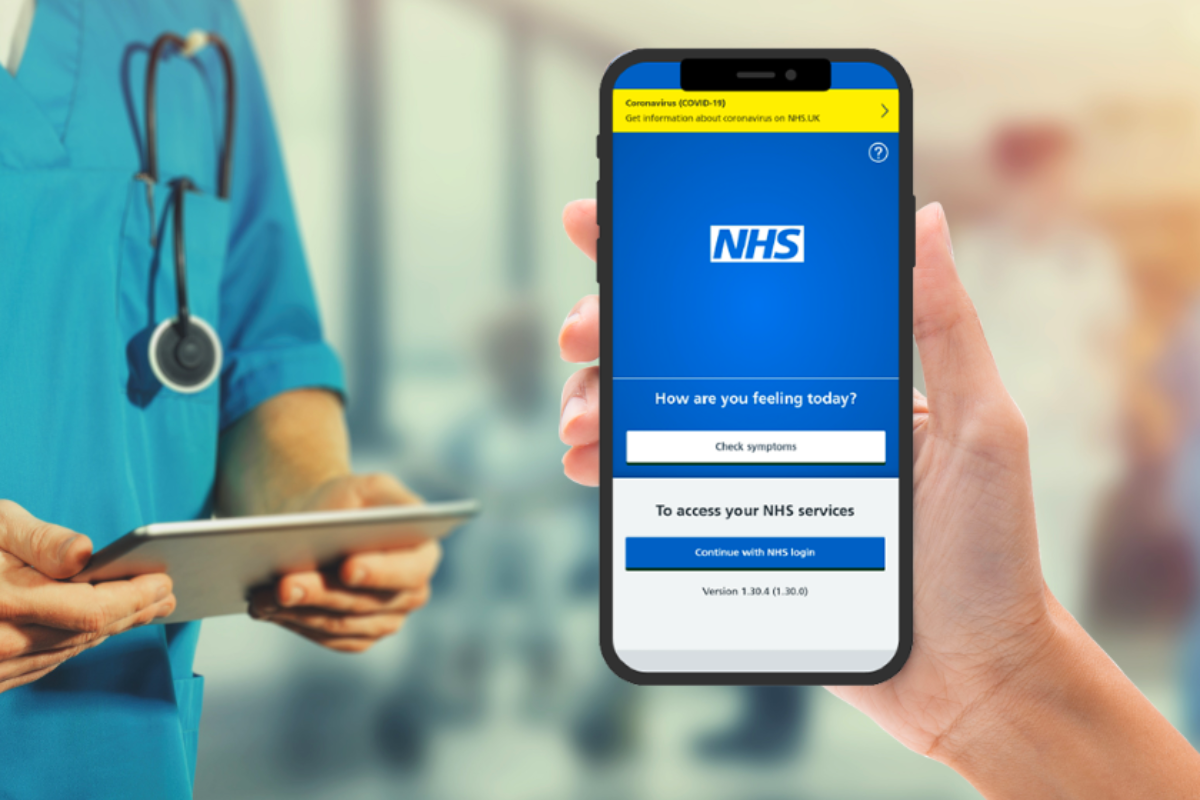 Patients Could Opt Out of Care Over NHS Data Platform Fears, Councillors Warned
 New Noodle Takeaway Planned For Flagship Filey Holiday Park
 Scarborough Construction Skills Village To Reopen Following £2 Million Investment
 Classic Cars Set To Begin Epic 500-Mile Roman Road Journey From Robin Hood's Bay
 Proposed Tourist Tax Sparks Fear Among Yorkshire Coast Accommodation Providers