


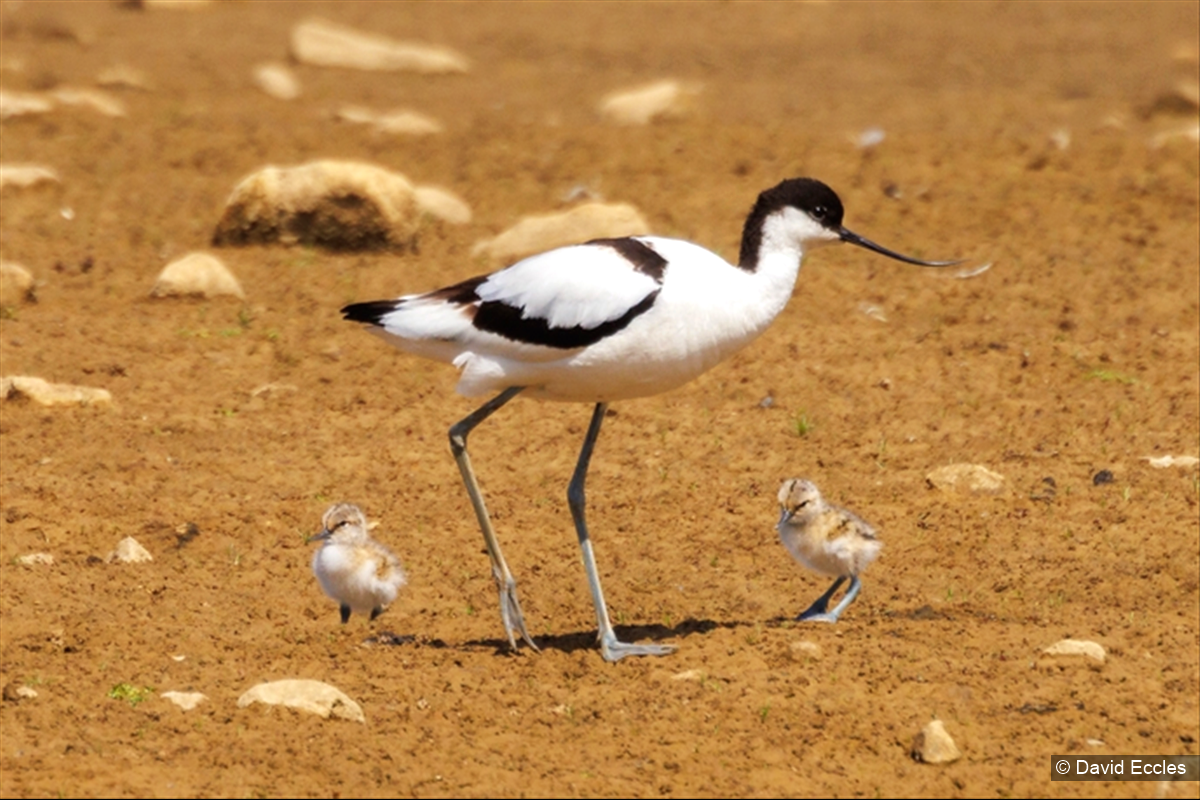
A pair of avocets have successfully bred at Filey Dams reserve in North Yorkshire for the first time and are currently nurturing four young chicks.
The only freshwater marsh of any size in the area, Filey Dams nature reserve is a magnet for migratory birds. Yorkshire Wildlife Trust, with the support of local volunteers and the Filey Bird Observatory, manages Filey Dams for a range of species and manipulates the water levels in the scrapes to create the shallow water and muddy edges perfect for wading birds.
In 2017, funding from Yorventure enabled the creation of a new scrape and sluice, increasing the area of habitat for wading birds, and the installation of a new central hide. A number of islands give avocets and other waders a safe place to nest, reducing the risk of predation from mammals such as foxes. A great variety of waders and waterfowl can be seen on the reserve including garganey, little grebe, little ringed plover, redshank, and green sandpipers; a squacco heron was also spotted there in May for the first time.
The avocet is a distinctively-patterned black and white wader with a long up-curved beak, recognisable as the RSPB’s logo.
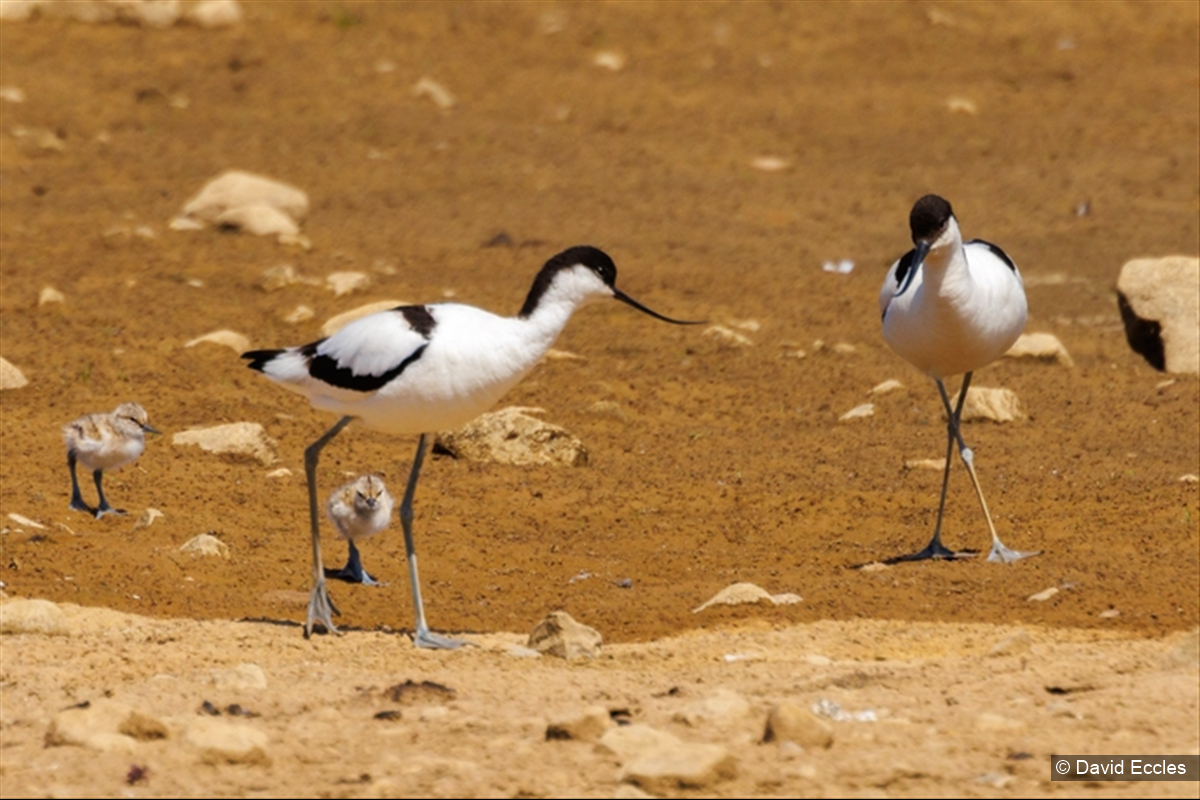
Once extinct from British shores, the avocet made a comeback thanks to the work of conservation bodies including The RSPB and Wildlife Trusts, and surprisingly, the impact of the Second World War. Avocets were able to recolonise the coastal marshes of East Anglia during the war, which were closed and flooded as a defence against invasion. Its return in the 1940s and subsequent increase in numbers represents one of the most successful conservation stories.
Avocets create a shallow scrape on bare ground to nest, sometimes with a few strands of plant material. As such, they are vulnerable to predation, and to changes in water levels. Many nesting attempts fail, but as the adults can live into their twenties a successful breeding attempt every few years is sufficient to maintain population levels.
Avocets have colonised a number of inland sites in Yorkshire, although their biggest numbers are on The Humber. In spite of their recent recovery, the avocet is included on the amber list of UK birds of conservation concern due to its localised distribution in Britain.
Wetland reserves are a vital habitat for waders such as avocets, as well as a huge range of other wildlife: 40% of the world's species rely on wetlands in some way. Recent heatwaves, drainage for agriculture and building works in the last sixty years mean the few remaining wetland reserves are vital refuges for species moving north in response to climate change. Wetland reserves now require manual management of features such as water levels in order to maintain them as this vital space for wildlife – work we would not be able to undertake without the support of incredible members, volunteers and donations.
You can learn more about these amazing habitats and how to support our wetland work at www.ywt.org.uk/wilder-wetlands.

 National League North Tests For Bridlington & Scarborough In FA Trophy 2nd Round Draw
 A174 Lythe Bank Closes For Five Days With Replacement Shuttle Buses Serving Whitby
 Lifeboat Crews Battle Storm Boelo After Emergency Beacon Alert Off Flamborough Head
 Northern Train Services CANCELLED Due To Communication System Issues
 Record Multimillion-Pound Investment Promises To Fix North Yorkshire's Roads And Potholes
 North Yorkshire Police Emergency Call Waiting Times Remain Low Despite Surge In Demand
 Row Over £20,000 'Incorrect' Public Toilet Charges in Whitby
 'Strong Fish Smells' Spark Objections To Seafood Business Application
 Maternity And Neonatal Services Face £736,000 Funding Gap To Meet New Safety Standards
 Concerns Raised Over Tourist Tax Powers In North York Moors National Park
 Educational Outcomes For Coastal Children To Receive Major Boost Under New Pilot Scheme
 Special Train Journey Evokes Precious Memories For Dementia Patients On The Yorkshire Coast
















Comments
Add a comment