



The Maritime and Coastguard Agency is reminding sea-farers that the UK's Differential Global Positioning System is being withdrawn next March.
The UK has provided augmentation to the United States of America’s GPS (Global Positioning System) service around the UK coast since 1997.
Marine radio beacon DGPS was developed to counter a deliberate error added to the civilian GPS service to degrade its positional accuracy. The DGPS correction to the position error meant an improvement in accuracy from approximately 50m to around 5m.
The system uses fourteen reference stations around the UK including one at Flamborough Head.
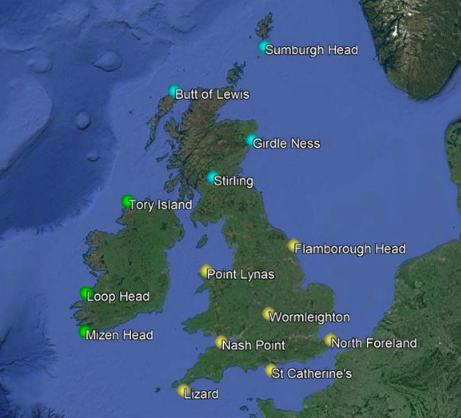
The US stopped adding the deliberate error to the GPS signal in 2000 and GPS now offers the civilian user a position accurate to around 3-5m.
Differential GPS was being provided by the General Lighthouse Authorities of the UK and Ireland (GLA). The UK government, in consultation with the GLA, resolved that the DGPS system has now become redundant and has decided to discontinue the DGPS service after 31 March 2022.
Dr Alan Grant, GLA DGPS System Director, said:
“After careful consideration of the results of the consultation process, the three GLAs have concluded that their DGPS system is now redundant. Today’s GNSS are able to meet all but the most stringent accuracy requirements, and position integrity can be provided by alternative means (RAIM or other visual and electronic aids to navigation).
“The GLAs recognise the need to provide adequate notice and support continuity of service going forward. As such, the DGPS system will remain operational until 31 March 2022, at which point the signals will cease.”
The infrastructure required to run the service is approaching the end of its design life; the GLAs conducted a stakeholder consultation to assess the requirements for the service going forward, surveying and interviewing stakeholders from across the maritime sector and beyond.
Of the responses received, 86% were from mariners and maritime operators, operating a wide range of vessels including ferries, container ships, tankers, liquid natural gas carriers, bulk carriers and leisure craft.
The survey resulted in a mix of responses, with the majority of mariners reporting that they use the DGPS system for accuracy improvements and integrity, while others reported that they do not use it.
All mariners reported using GPS today with around 40% also making use of GLONASS, and around 9% using Galileo too. From the response received, it is expected that more mariners will move to multi-constellation receivers, making use of GPS, GLONASS, Galileo and BeiDou over the next five to ten years.
Following a change in maritime receiver standards in 2003, all receivers now include Receiver Autonomous Integrity Monitoring (RAIM). RAIM is a means of determining whether the resulting position estimate is safe to use through an algorithm within the receiver.
Differential corrections are also available from other sources, including Satellite Based Augmentation Systems (SBAS), which are primarily provided for aviation users. Work is under way in Europe to introduce a maritime service to EGNOS, the European SBAS. This service is expected to be available around 2022.
Vessels that need high accuracy position and integrity for operations mainly utilise a number of commercial satellite-based services; the decision to discontinue DGPS has no operational impact on these services.
The GLAs advise mariners to consider their use of DGPS and to plan for its discontinuance accordingly. Mariners should check their GNSS receiver(s) to confirm the presence of RAIM and consider upgrading to type-approved SBAS receiving equipment when available.
The GLAs encourage mariners to use all available AtoN - whether visual or electronic - to support their safe passage and the protection of the environment.

 Solar Panels Confirmed For Whitby And Eastfield Public Buildings To Cut Energy Bills
 Scarborough HMO Growth Sparks Fresh Tourism Concerns
 BLOWN OFF COURSE: Late Penalty Spoils Boro’s Comeback Hopes
 Giantkilling Bridlington Town's Trophy Triumph
 Whitby Town Lose Out In Six-Goal Thriller
 Scarborough Rugby Edge Thriller On Busy Afternoon
 52 New Homes Approved in Sherburn Despite GP Surgery Capacity Warning
 Scarborough's Kingfishers Celebrate West Yorkshire Success
 Pickering Town Punished By Visitors
 Scarborough Dealer Jailed
 Over 500 Homes In Scarborough And Whitby To Receive Energy Efficiency Upgrades
 FLOOD WARNINGS Issued For Scarborough's Foreshore Road & Sandside













Comments
Add a comment