


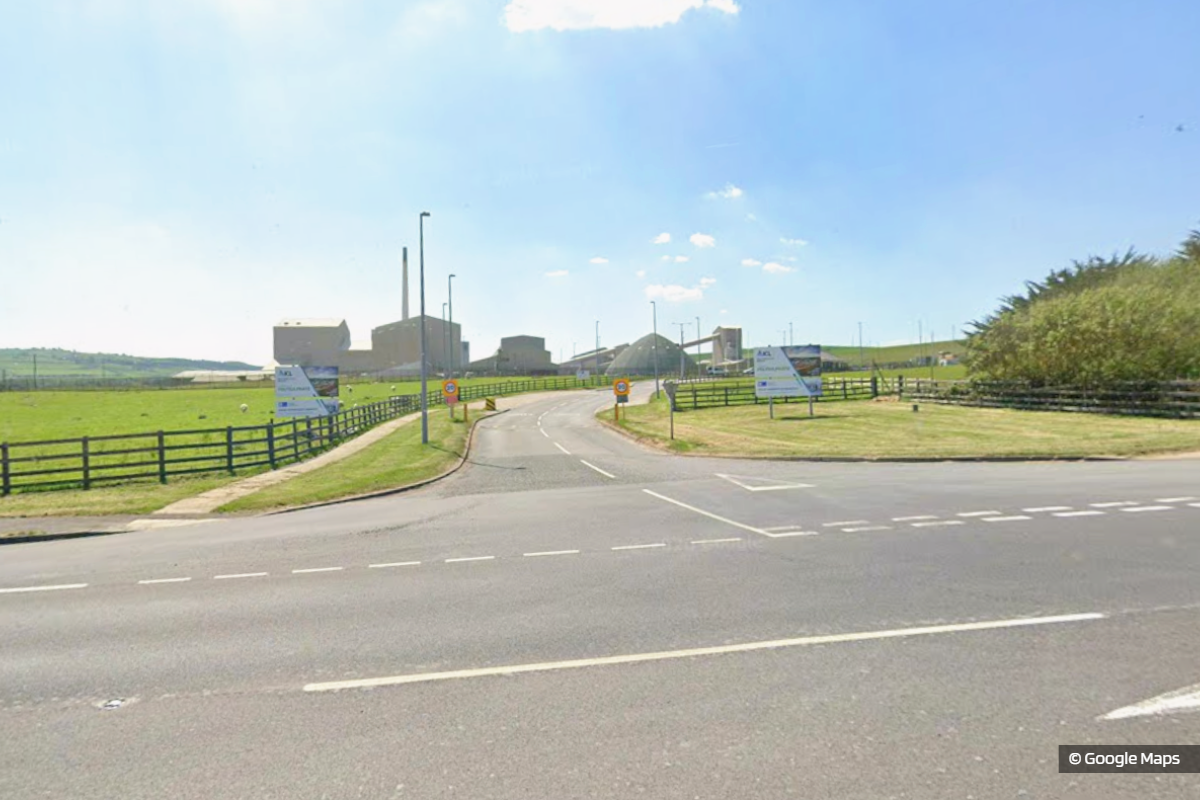
A world-leading underground science facility near Whitby faces an existential threat after a review proposed cutting 40 percent of its operating budget.
A £587 million economic boost and hundreds of highly skilled jobs hang in the balance as proposed funding cuts threaten a pioneering dark matter experiment near Whitby.
Funding for Boulby Underground Laboratory and preparatory work for the XLZD project will be reduced by around 40 percent under plans announced by the Science and Technology Facilities Council (STFC).
The proposed international experiment aims to discover dark matter, a mysterious substance believed to make up around 85 percent of the material in the universe. Scientists believe a successful discovery would rank among the most important scientific breakthroughs of the modern age and could potentially earn a Nobel Prize.
Speaking during a Westminster Hall debate on the future of science research facilities, Scarborough and Whitby MP Alison Hume outlined the laboratory's unique capabilities.
Alison Hume said:
"In recent years Boulby has been preparing to host a massive international experiment seeking to detect dark matter. It's called the XLZD, a $1 billion international science project to create the most sensitive dark matter detector ever constructed.
Only a small number of underground laboratories worldwide are considered capable of hosting such an experiment and Boulby is one of them.
The laboratory is the UK's only deep science facility underground, located 1.1km beneath the Earth's surface in a working polyhalite and rock salt mine. Boulby is the deepest laboratory in the UK and one of only a dozen such facilities worldwide."
Severe financial uncertainty now surrounds the site following the STFC prioritisation review.
Alison Hume said:
"Since 2020, Boulby has attracted millions of pounds in investment, but hosting this experiment in the UK is still not guaranteed. It's competing against underground labs across the world, and in July of this year, a Science and Technologies Facilities Council prioritization review proposed cutting Boulby's operating budget by a massive 40%, creating a perception of uncertainty about continued support.
Boulby has substantial fixed operating costs, so the bulk of required savings may have to be found from cuts to the staffing budget, potentially leading to redundancies at the lab, as well as limiting opportunities for future expansion."
The Scarborough and Whitby MP further stressed the wider implications of the funding review on British scientific research.
Alison Hume said:
"These cuts are so drastic. They pose an existential threat to Boulby's future. This issue goes far beyond Boulby.
STFC's prioritization review has proposed sweeping cuts across the board for fundamental physics, nuclear physics, and astronomy. The cuts are 162 million in cumulative savings by 2030.
TV scientist and professor at the University of Manchester, Brian Cox, has likened the impact of these cuts to the destruction of the future.
Multiple physics facilities carrying out world-leading research now face serious funding challenges or the threat of closure."
In a written statement following her visits to the laboratory, Ms Hume highlighted the regional impact of the facility.
Alison Hume said:
"Boulby Underground Laboratory is where North Yorkshire could help unlock one of the greatest mysteries in modern science - dark matter.
The proposed XLZD experiment would place our region and the UK as a whole at the centre of a truly world-leading discovery while contributing £587 million to the local economy, creating highly skilled jobs and developing Boulby as a regional skills hub for the future.
We cannot afford to turn our backs on an opportunity that could transform both scientific understanding and economic growth."
During the parliamentary debate, Ms Hume pressed ministers on the stark regional disparities in the proposed cuts.
Alison Hume said:
"Independent analysis by Arup shows that the proposed expansion of Boulby and the construction of XLZD, it would bring approximately 587 million pounds to the UK economy through creating skilled jobs, increasing supply chains, advanced manufacturing, and attracting scientific investment into the region, as well as plans for a visitors centre to showcase the Northeast's remarkable contribution to our understanding of the universe, which could attract hundreds of thousands of visitors annually.
So, despite the government increasing spending on R&D, I I would be grateful if the Minister could address why is the facility in the Northeast facing more than double the cuts faced by those in the South? And will she publish the evidence underpinning those decisions?
And turning specifically to Boulby, please can the Minister explain how the government has assessed the laboratory's unique strategic position? What weight has been given to the projected economic impact of the expansion of Boulby lab?
Science facilities such as Boulby are places where discoveries are made, where young people are inspired, where international partnerships are forged, and where the foundations of future industries are laid. It offers transformational economic opportunity for the Northeast, strengthens our industrial strategy, our skills base, and our reputation on the world stage.
I therefore urge the Minister to recognize the exceptional national value of Boulby Underground Laboratory and other UK science facilities and laboratories and to ensure that Britain remains at the forefront of scientific discovery for decades to come."
The proposed cuts arrive despite Boulby and the XLZD project having been previously identified as strategic national priorities by the government and UK Research and Innovation.
Professor Dan Tovey of the University of Sheffield, who attended the debate, added his voice to the campaign.
Professor Dan Tovey said:
"This is a tremendous opportunity for the UK to host a world-leading experiment that could revolutionise our understanding of the universe. We must not throw this golden opportunity away on account of the current financial challenges facing STFC and UKRI.
Beyond potentially transforming our understanding of fundamental physics and bringing a Nobel Prize to the UK, the inward investment, jobs, and high-value training that the project will bring to North Yorkshire and the North East will generate profound socioeconomic benefits for the region and the wider nation."
Responding to the concerns during the debate, Minister for the Future of Work, Kate Dearden MP, insisted the laboratory remains a vital asset and moved to reassure staff about immediate job security.
Kate Dearden said:
"I really want to reiterate that Boulby will remain an internationally significant research facility and will continue to support a range of world-leading underground science and provide that highly skilled employment in the region with potential to play an even larger role in the UK's scientific future.
UKRI has also announced funding that will sustain the UK's continued engagement in the international XLZD dark matter experiment beyond the current 7.8 million pound infrastructure fund grant which ends in 2027.
But Boulby will remain well placed to pursue future funding opportunities alongside its outstanding significant work. UKRI and STFC are engaging directly with facilities, laboratories, partner staff and trade unions throughout the implementation of the saving plan including any potential workforce implications, but to be clear, no staff exits are expected this financial year and formal processes will follow where needed.
Our task today is to ensure that the next and the generation of discoveries and the innovations they will enable happen here too. The government will achieve this goal not just through record investment in public R&D but through responsible stewardship of our national assets, that international cooperation and also taking the difficult decisions necessary to ensure that we have a portfolio of research facilities that are fit for the future."

 Scarborough Residents Will Shape £19.5 Million Town Investment At Friday Event
 Thousands Of Street Lights Will Be Switched Off To Save Millions On East Riding Roads
 Councillors Question If Council-Owned Housebuilder Will Ever Turn Finances Around
 Will Coastal Towns Get a Fair Share Of Proposed North Yorkshire Visitor Levy Spending?
 Meetings to Show How Offshore Renewables Boom Promises Economic Boost for Yorkshire Coast
 Vintage Hot-Rods And Motorcycles To Race Across Bridlington Beach
 Volunteer Drivers Needed To Prevent Missed Hospital Appointments In Bridlington And Scarborough
 Public Urination And Noise Concerns Over Scarborough Nightclub's 3am Licence Plan
 Improvements To North Yorkshire School Travel Proposed Following Policy Review
 Major Redevelopment Proposed For Scarborough Town Centre Buildings And Car Parks
 More Money Needed for Scarborough Harbour Redevelopment
 Scarborough To Host 12-Minute Drone Display Following Goldwing Light Parade