
Those lucky enough to have been there at the dawn of Syria's new future will never forget it.
After more than half a century of repression, an entire nation erupted in deafening celebration. Guns blazed upwards into the skies over Damascus, tens of thousands came out to sing, dance and do whatever else had been banned for decades.
The hated, wicked Bashar al Assad and his murderous clan had been routed, sent packing to Moscow and Syrians took to the streets and romped through his forbidden palaces to savour their freedom.
But a year on, the country faces enormous challenges.
The good news first. Syria has not descended into chaos and bedlam as have other revolutions. There is an order and stability of sorts, with some regrettable and bloody exceptions.
Ahmed al Sharaa, the Al Qaeda jihadi turned revolutionary leader, has achieved the most on the world stage. In a startling diplomatic tour de force, he has charmed his way from Riyadh to Washington.
The first Syrian leader ever to visit the White House, he was feted by US President Donald Trump, who even sprayed him with aftershave. Al Sharaa's wooing of the American president, with the help of Middle Eastern allies, has been as successful as it was unexpected.
US sanctions are being lifted, promising the economic relief his country so desperately needs. Foreign investment is beginning to pour in from Turkey and the Gulf.
Some neighbours have been less helpful. Israel has chosen a path of suspicious cynicism. Having opposed the Assads for decades, it has appeared unwilling to give the benefit of the doubt to the forces that removed it.
Read more:
Syria jubilantly marks a year since Assad's fall
From enemy to ally: Why Sharaa's Trump meeting matters
Israeli airstrikes have destroyed much of the military hardware the new government could have used to maintain control and order. Israeli forces have seized a chunk of southern Syria and continue to violate the sovereignty of its neighbour with operations deep inside its territory.
Ahmed al Sharaa has been successful in removing the repressive apparatus of the Assad regime, emptying its hated prisons and disbanding its secret police. Fears of a Taliban-style Syrian state have proven so far unfounded. Alcohol is tolerated, and women are encouraged to play a role in the state.
But there are reasons to be worried. The new government's security forces have been blamed for the slaughter of Alawite and Druze minorities, whose welfare Israel claims to be protecting in its interventions.
Al Sharaa's efforts to forge a new political settlement, including all Syria's many communities, are looking opaque and slow. He will need to do a lot more if he wants to build the foundations of a stable and modern state.
Mr Trump says Al Sharaa and his country deserve a chance. Syria's new leader must not squander it. There was enormous hope and promise on the streets of Damascus in the days after Assad's spectacular fall.
As with every revolution, there is both opportunity and huge jeopardy, and the window for progress narrows as those memories fade.

(c) Sky News 2025: Syria one year on: 'Opportunity and huge jeopardy' as nation moves past Assad

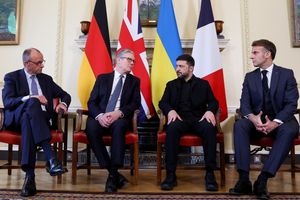 Europe must 'ramp up' pressure on Russia, says No 10 after Coalition of the Willing meeting with Volodymyr Zelenskyy
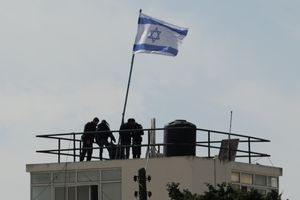 Israeli government accused of intimidation and harassment after raid on UN building in Jerusalem
 Greek farmers have forced shutdown of Crete airport
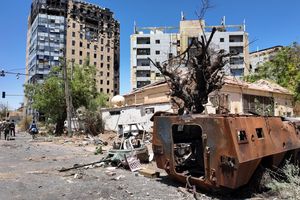 63 children killed in attacks on Sudan kindergarten and hospital, WHO says
 Paramount launches hostile takeover bid for Warner Bros
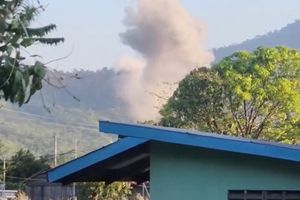 Thailand launches airstrikes against Cambodia as deadly border clashes reignite
 Storm Bram: 'Danger to life' warning as strong winds, heavy rain and flooding forecast for parts of UK and Ireland
 Woman jailed for blackmailing ex-Tottenham Hotspur footballer Son Heung-min with pregnancy claim
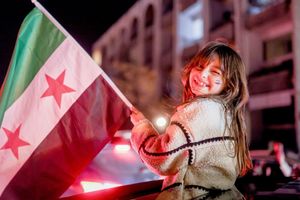 Syria jubilantly marks a year since Assad's fall with parades - and leader makes new pledge