

Mojtaba Khamenei has been confirmed as the new Iranian supreme leader - only the third in its history.
The 56-year-old succeeds his father, Ayatollah Ali Khamenei, who was killed in his Tehran compound on the first day of the war. He was the supreme leader for more than 37 years before his death.
Mojtaba was not there, and so survived, but his mother, wife and daughter were killed.
Iran war latest live blog updates
The supreme leader is chosen by the assembly of experts, a body of 88 Islamic scholars selected for their loyalty to the regime.
A building where it meets was flattened in an airstrike, but none of them are thought to have been present at the time.
Little is known about Mojtaba Khamenei.
He is the second eldest son of Ayatollah Ali Khamenei and has kept a low profile over the years, rarely speaking publicly or taking Friday prayers.
The 56-year-old is a hardline conservative who served in the Habib battalion of the Islamic Revolutionary Guard Corps (IRGC) during the Iran-Iraq War in the 1980s and has been linked with the violent suppression of protests in his country.
His time in the IRGC helped him build influential connections with men who now hold senior positions in the country.
Describing the new leader as a "lightweight", US President Donald Trump said: "Khamenei's son is unacceptable to me.
"We want someone that will bring harmony and peace to Iran."
Tara Kangarlou, author of The Heartbeat of Iran, told Sky News that Mojtaba Khamenei "holds a lot of power in the IRGC apparatus; he has his hands in pretty much every infrastructure you can imagine in Iran: so a lot of money, power and influence".
Khamenei is under US sanctions but has reportedly amassed a valuable empire of properties around the world, including in London.
Unlike his father, who was a well-known intellectual, a student of Persian poetry and strong orator with a following inside Iran before he became supreme leader, Khamenei does not have a strong reputation in the country.
The position of supreme leader is not just the ultimate authority in Iran, he (and it's always a man) is the guardian of the Islamic Republic.
Although Khamenei studied in the holy city of Qom, he has only ever been a mid-ranking cleric, not a senior ayatollah.
By inheriting the role, the assembly of experts has in effect created a dynasty - not unlike a monarchy.
But Iranians do not like dynasties: they overthrew the Qajar dynasty in 1925 and the Pahlavi monarchy in 1979.
Read more:
Strategy behind the US-Israeli strikes
Royal Navy destroyer will arrive too late for Cyprus
Although Khamenei has influence in the inner circles of Iranian politics, he has never held public office or been elected to any government role.
In 1989, when his father became supreme leader, he worked in his offices and became his "principal gatekeeper" and "the power behind the robes", according to US diplomatic cables published by WikiLeaks.
He is close to the IRGC, and that's important because they would have been instrumental in his appointment, and it suggests the hardliners retain some power, which does not bode well for negotiations to end the war.

(c) Sky News 2026: What we know about Iran's new supreme leader Mojtaba Khamenei - and why his ap

 Kemi Badenoch accused of insulting armed forces for saying RAF 'hanging around' in the Middle East
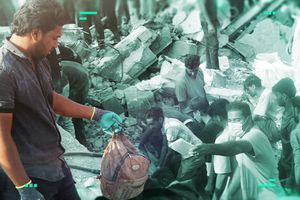 New evidence challenges Trump claim about deadly girls school strike
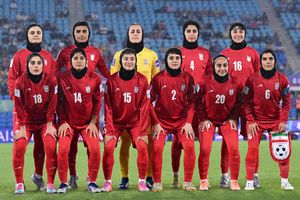 Australia to grant visas to Iranian women footballers after Trump appeal
 Iran war: Markets are plummeting as the conflict escalates - but not every industry is affected
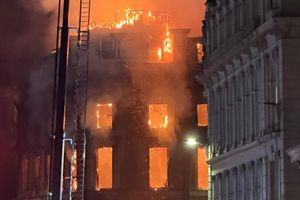 Fire shuts Scotland's busiest train station for at least two days
 Iran's miscalculation has 'destroyed everything', Qatar's PM says