

Sir Keir Starmer had wanted this week to get on with his "cost of living tour" of the country to tap into voters' concerns in this all-important election year.
Donald Trump's Greenland threat obstructed that: Over the weekend, the prime minister and his team have been locked in talks in Downing Street, and with European allies, over how to respond to President Trump's latest audacious move.
The president's threat to apply an additional levy on goods from the UK, Denmark, France, Germany, the Netherlands, Norway, Sweden and Finland from 1 February is a moment of huge escalation in tensions between allies over Greenland that has astonished and angered.
"It's through the looking glass," opined one official. "We don't know if he's going to back down, what if he doesn't?"
For now, the prime minister and his team are working to get him to do exactly that.
"As before, we're taking a deep breath and using relationships to figure out exactly where the US are before reacting to every social media post," said one figure involved. "What the PM has said publicly illustrates how we feel and how we have been working on it this weekend."
Starmer says Trump not prepared to use military force to take Greenland - latest updates
Sir Keir said on Saturday that the decision to impose 10% tariffs on the UK and seven other European countries was "completely wrong" and reiterated his position that the future of Greenland is "a matter for the Greenlanders and the Danes".
On Sunday, the UK issued another joint statement with Denmark, Finland, France, Germany, the Netherlands, Norway and Sweden, warning that "tariff threats undermine transatlantic relations and risk a dangerous downward spiral".
This escalation appears to have perhaps been sparked by the decision by these eight European NATO members to carry out a reconnaissance mission to Greenland in recent days.
Prime Minister Meloni of Italy, who spoke to President Trump on Sunday morning, said the White House may have misunderstood the military exercise and not realised it was directed against Russia and China and not the US.
Read more: Why Trump says the US 'needs' Greenland
"There could have been a problem of understanding and communication," she said.
"It seems to me that the risk is that the initiatives of some European countries were interpreted as anti-American, which is clearly not the intention."
Allies have since reiterated that point, saying in their Sunday statement that they were "committed to strengthening Arctic security as a shared transatlantic interest".
The "pre-co-ordinated Danish exercise Arctic Endurance, conducted with Allies, respond to this necessity. It poses no threat to anyone".
The allies' intention is to work with the US to strengthen High North security, and this will be the message the prime minister will make when he speaks on the latest developments this week.
Read more:
How NATO's collective defence clause works
Analysis: Trump likely gambling he can get away with Greenland grab
Colombia, Cuba, Mexico, Greenland or Iran - where could Trump strike next?
One senior government official said the Trump administration was "not listening to calibrated language when the UK and other European capitals [say they] believe in Arctic security".
European leaders at the annual Davos summit this week - the PM is currently not expected to be attending - will want impress upon him that allies want to work with the US through NATO.
But the big unknown is whether the US wants to work with European allies through NATO.
When it comes to Greenland and security in the High North, President Trump seems to want to work unilaterally.
He has made it clear from the early days of his administration that he wants to annex Greenland, build a bigger America and use this landmass to strengthen US security.
The Danes have clearly told President Trump that he could massively expand US security presence on Greenland, as written into previous treaties, but that doesn't seem to be enough.
It is almost as if President Trump, not a fan of multilateralism, is trying to undermine NATO, just as he is undermining the United Nations by drawing up a Board of Peace to supervise Gaza's transitional administration.
He's also asking 60 countries to contribute $1bn if they want their membership on the board to extend beyond three years.
After fulfilling its initial aim to end the conflict in Gaza, the board would then expand to tackle conflicts elsewhere. On both fronts, President Trump is choosing to turn away from international bodies.
It is a clear pattern.
Last week, he announced his intent to withdraw the US from 66 multilateral forums and retracted billions of dollars in spending from international organisations.
This latest rupture is a reflection of how, in just a year, the certainties that have underpinned our global order have come undone.
The US has shifted from being the foundation stone of the Western alliance to an unreliable ally.
The threats over Greenland must be a red line for the UK and other allies.
On that, the UK is clear.
The prime minister will attempt to negotiate with Trump to see off the tariff threat, but he will not back down over the principle of the sovereignty of Denmark.
Expect Sir Keir to reiterate the UK's position while also trying to reiterate the UK's close relationship with the US.
I would not expect the PM to use the language of President Macron, who spoke of intimidation and threats, over President Trump's tariff warning.
Instead, the PM will make the case this week that the tariffs are not sensible and not in the interests of the UK or the US.
Back on to what he wants to spend his time talking about, the cost of living, he is also expected to draw a clear line between the need to engage in international affairs to try to drive down household bills at home.
But this is a difficult moment for a prime minister who has prided himself on his ability to negotiate with President Trump to secure better trading terms with the UK.
Lib Dem leader Ed Davey said on Sunday the PM's "US policy lies in tatters" as NATO allies are "punished" by Trump for "doing the right thing".
As for the tariffs, as of Sunday, the government were not sure about the implications of the Trump threat, with information scant on how this particular 10% tariff might apply.
It is possible that the threat will fall away - as happened with the 100% levy on films made outside the US.
But these tensions could also escalate - and all the options are deeply worrying.
From levies and trade wars, to the disintegration of NATO and withdrawal of support for Ukraine. What if the US did decide to use force to take Greenland? Would European armies end up in conflict with the US?
All of it seems unconscionable in a situation that is fast becoming the most serious crisis in transatlantic relations in decades. The UK will do all it can to try to de-escalate, but it won't back down.

(c) Sky News 2026: The misunderstanding that may have triggered Trump's latest Greenland threat

 Doctors warn of 'horrific' impact of tech and devices on children and young people's health
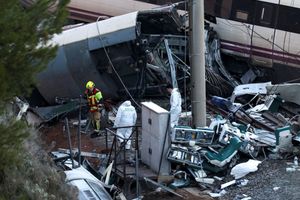 What we know so far about the fatal train crash in Spain
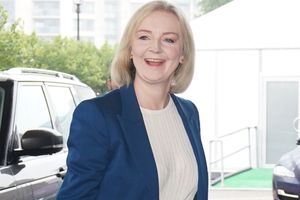 Robert Jenrick 'told Kemi Badenoch to kick Liz Truss out' of the Conservatives
 Why Prince Harry and six other household names are suing one of Britain's biggest media groups
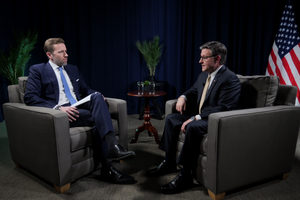 'Prominent' Chinese super-embassy sends 'certain message', US Speaker Mike Johnson says
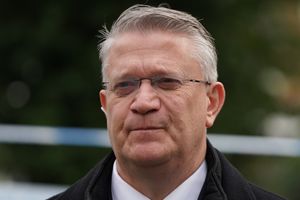 Conservative MP Andrew Rosindell defects to Reform UK