


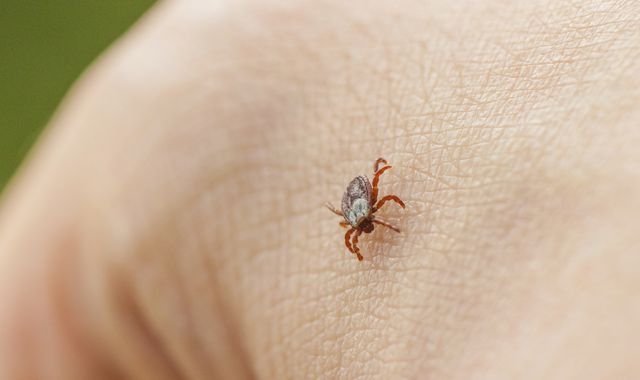
Ticks carrying a severe and life-threatening virus are living for longer in the UK due to more regular heatwaves, an expert has warned.
Hyalomma ticks are the main transmitters of Crimean-Congo haemorrhagic fever, a tick-borne viral disease with a fatality rate of 10%-40%.
Symptoms include fever, dizziness, and nausea - and severely ill patients may experience rapid kidney deterioration and sudden liver failure, the World Health Organisation says.
Hyalomma ticks sometimes arrive in the UK by attaching themselves to migratory birds from the Mediterranean and Africa during the middle stage of their life cycle.
They reach the next stage in a process called moulting, during which they shed their hard outer covering.
Dr Jolyon Medlock, head of medical entomology at the UK Health Security Agency, said: "What we're seeing now in heatwave years is that they can moult through to the adult stage, and we then could be able to pick up records of adults through our tick surveillance.
"These have happened less than probably five times in the last 10 years or so, but it's something that we and colleagues across northern Europe are starting to pick up a bit more.
"It doesn't mean the tick will survive, and it doesn't necessarily mean it's an infection risk."
There have been records of hyalomma nymphs on migratory birds over the last 50 years, but they have struggled to survive in cooler weather.
Dr Medlock went on: "In their native area, they're vectors of Crimean-Congo haemorrhagic fever virus, which is a relatively common virus that occurs in the Balkans that started to emerge in Spain recently.
"So these are the sort of climate-sensitive tick-borne disease pathogens that we might see."
The virus can incubate anywhere from one to nine days, and can also be transmitted through contact with infected animal blood or tissues.
More from Sky News:
Hero Flydubai captain tells of cockpit fight
'Integrity of game' at stake, says FA after City verdicts
Milder winters and hotter summers may also cause a "shift in the seasonality" of ticks in the UK.
Dr Medlock added: "If you've got mild winters, then they will remain active throughout the winter.
"Usually they say 7C is the critical temperature for activity, I've seen them active at 3C."

(c) Sky News 2026: Ticks carrying life-threatening virus living longer in UK due to heatwaves, expert warns

 UK-Iranian national arrested in RAF Fairford investigation released on bail
 Man accused of Ann Widdecombe murder charged with preparing terrorist acts including against Nigel Farage
 England cricketer Brydon Carse charged by regulator following arrest on night out
 Retired engineer jailed for blowing up ULEZ camera using homemade bomb
 Tommy Robinson appears in court over alleged harassment of two journalists
 Ex-priest who ran rave-inspired 'cult' group found guilty of rape and indecent assault
 Tributes paid to teenagers who died after car plunged into River Wear
 City steps up opposition to Healey bank tax raid in budget