


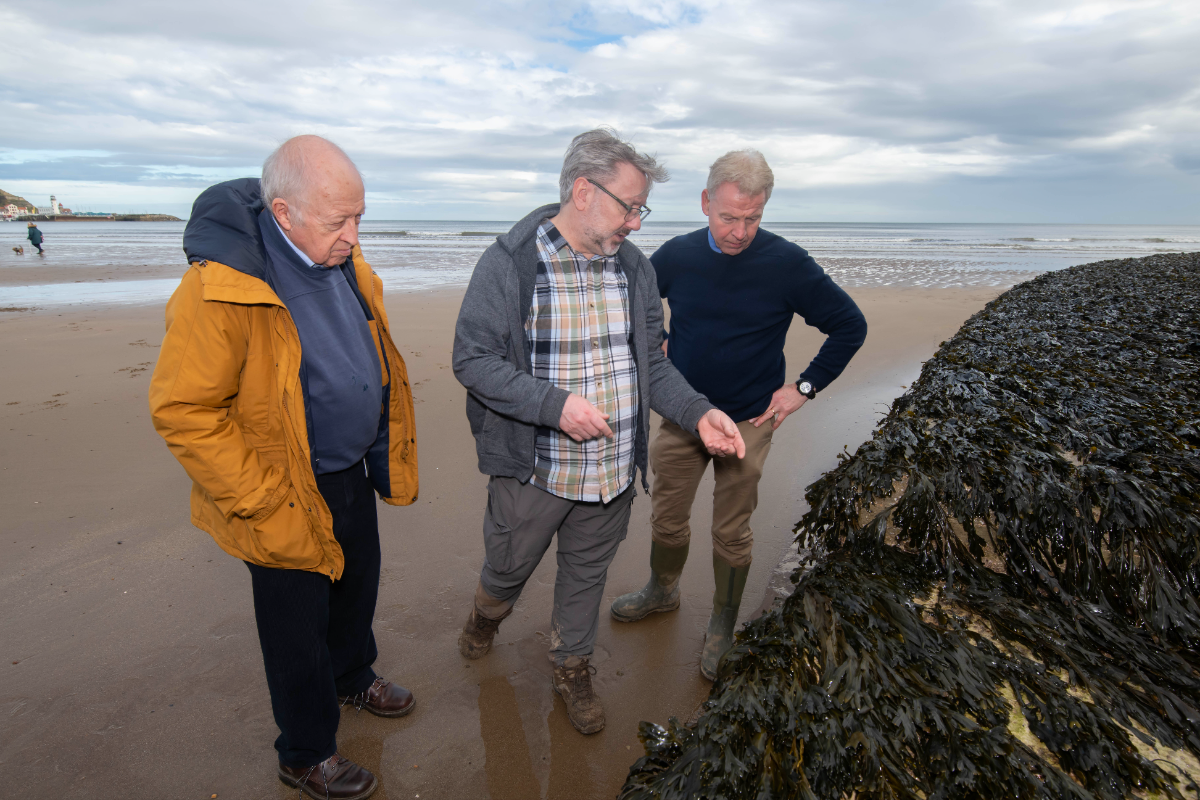
Yorkshire Water and researchers are investigating the use of seaweed aquaculture and aquatic plants to absorb excess pollution and improve bathing water quality in Scarborough.
Innovative natural solutions, including seaweed aquaculture, are being explored to help tackle bathing water quality issues in Scarborough.
Professor Darren Gröcke, who has previously used seaweed monitoring to study pollution, and Miles Cameron from Yorkshire Water have highlighted the plant's potential to absorb excess nutrients from the sea.
Professor Gröcke elaborated on the complexities of using harvested seaweed and the importance of using multiple tools to monitor Scarborough's water quality:
"I've been in discussions with Sea Grown and talked about ideas about using seaweed aquaculture as a way of absorbing those excess nutrients. There are other ways of course, such as mussel farms and aquaculture um that can actually help absorb those. You can even go up to the Scalby Beck and use aquatic plants that will absorb all those excess nitrates and and phosphates. Those are all viable solutions and and I wouldn't advise against them. They they can all benefit both the removal of nutrients but also the biodiversity and things like that in those waters. The one problem that you'll always run into, though, is that you've then got to farm that seaweed and then what do you do with it?"
By combining data collection from sea users, infrastructure investments from Yorkshire Water, and natural solutions like aquatic plants, stakeholders hope to secure long-term improvements for Scarborough's coastline.
The discussions aim to address local environmental challenges while improving the visibility of water quality data for the public. The efforts are part of a wider strategy that includes significant infrastructure investments targeted for completion by 2030.
"Of course there are other studies I'm doing with farmers looking at um seaweed as a biofertiliser for various crop systems. But of course you then have to test all that seaweed for all other potential toxic elements and and pharmaceuticals all sorts of things because they love absorbing everything. Um so I think those sort of natural solutions are something that we should be looking at overall. In the past we've always used the bathing water quality looking at E coli and um intestinal enterococci. And really what we should be doing is a multi-proxy approach. Using multiple tools that then all point to the same issue, then we have a much stronger argument to then try and clean things up."
Alongside traditional water quality testing, experts are looking at how natural interventions like mussel farms and aquatic plants can boost biodiversity while actively cleaning the water.
Speaking about the upcoming investments, data transparency, and the collaboration with local businesses like Sea Grown, Miles Cameron said:
"I completely agree. We talked earlier on about how on earth do we make this data more visible to people, and what better way than having the people who use the the sea involved in collecting the information? So yeah, we'd love to be involved in with that."
While seaweed presents a promising method for removing nitrates and phosphates, it also brings unique challenges.
Mr Cameron added:
"I want to clarify, 2030 feels a long way away to me and there there could be a whole load of things go wrong. That's the date we're going to have to have delivered the investment by and that's the date when the improvements will have been secured. I'm expecting things to look better before then, though, because I know the amount of work that's going in from people all around this table to improve things here and now and I'm really hopeful for the season ahead. So I guess, yeah, I'm sure we'll see an impact before then."
Because the plants are highly effective at absorbing substances from the water, they can also take in potentially harmful elements.
This means that any harvested seaweed must undergo rigorous testing before it can be safely repurposed, for example, as an agricultural biofertiliser for crop systems.

 Crime Drops By Over Three Per Cent Across North Yorkshire As Arrest Rates Rise
 Yorkshire Coast Concerns: Coastal Tourism in England Drops by Ten Percent
 Council Considers New Bonfire Night Restrictions For Scarborough Beaches Following Sea Life Centre Outrage
 East Riding Authorities Team Up For Investment Event
 Martial Arts and Self Defence at Bridlington Spa
 North Yorkshire Moors Railway Launches Help Save Bridge 42 Campaign
 East Riding Council Form Adult Social Care Improvement Board
 Scalby Walkers Raise Nearly Two Grand
 Scarborough Into 5th After Easter Double Against Play-off Rivals
 Calls For Year-Round Water Testing In Scarborough Amid Sea Pool Plans
 North Yorkshire Council: Iran War Fuel Situation Monitored
 Whitby Town Blown Away By Relegation Rivals As Gap Narrows To One Point